Túpac Amaru II’s Rebellion according to Structural Demographic Theory
Follow into
Save into
Follow into
Sophomore Lynnfield High School, MA, USA
The rebellion of Túpac Amaru II, occurring in 1780–1783 in the southern Cusco region and the Real Audiencia of Charcas in the Viceroyalty of Peru, present-day Peru and Bolivia and stretching into Ecuador and Argentina, was the largest revolt in colonial Spanish American history. Its first and most prominent phase, occurring in 1780–1781, was led by José Gabriel Condorcanqui, who adopted the name “Túpac Amaru II” to underscore his ancestral connection to Túpac Amaru, the last Sapa Inca (ruler of the Inca Empire), and sought to end Spain’s oppressive rule over the region’s indigenous people. More than 100,000 people died as a result of the rebellion, and the period is often remembered as one of tremendous violence and struggle. Facing near-total defeat, the Spanish royalists mobilized an army of more than 17,000 soldiers just to suppress the first phase of the rebellion. Nevertheless, the rebellion remains largely unknown compared with other contemporary conflicts, including the American Revolutionary War and the Haitian Revolution.
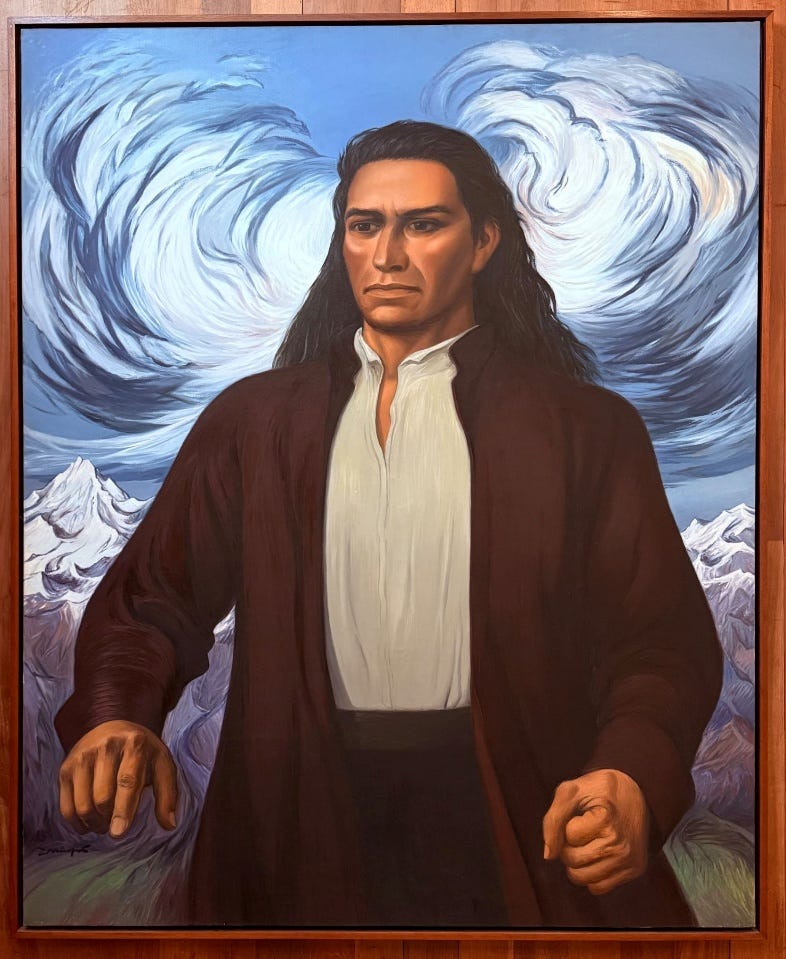
Portrait of Túpac Amaru II by Teodoro Núñez Ureta, Museo Central, Lima-Peru
I learned about the social, political, and economic structure of the Viceroyalty of Peru, both before and during Túpac Amaru II’s rebellion, as a result of my research for a high school project examining the conflict for the 2026 Massachusetts National History Day competition. According to my research, the rebellion is largely attributed to indigenous people’s profound frustration with colonial oppression, especially heavy taxes and stringent laws imposed across Spanish America during the Bourbon Reforms of the 18th century. Although those proposed causes make sense, they do not fully explain why the rebellion emerged only in southern Cusco and nowhere else in the Viceroyalty or why it occurred at that specific moment in time, after two centuries of oppression and abuse. Was it just an indigenous peasant rebellion, or was it caused by a conflict between elites? Did Túpac Amaru II seek outright independence or merely reform, and, in either case, were his motivations mostly altruistic or opportunistic? While I was conducting my research, my father, a physician who reads widely, introduced me to Peter Turchin’s End of Times and later Ages of Discord, two books whose themes seem to align perfectly with the rebellion of Túpac Amaru II. Thinking about the uprising and the associated infighting among elites, the wealth pump connected with popular immiseration and fiscal pressures, and even changes in popular demography can afford new insights into the rebellion. Even so, no scholar has yet proposed applying structural demographic theory (STD) to explain the event. This is what I will do in this article.
José Gabriel Condorcanqui was born in Surimana, Cusco, on March 19, 1738. His mother’s family descended directly from the last Sapa Inca, Túpac Amaru, who led the final Inca resistance until his execution by the Spanish in 1572. His father, meanwhile, held the noble indigenous title of kuraka, or cacique to the Spanish. Briefly, kurakas administered provinces and towns and were the highest rank in the indigenous social class system. The Spanish equivalent was the corregidor, who was a member of the most abundant Spanish elite class, and a royal administrator who maintained Spanish authority over a certain region. Condorcanqui, having both royal Incan heritage and a kuraka for a father, traveled to Lima in the late 1770s in order to have his Incan royalty recognized by Spain and the visitador Areche but his title of Inca not was guaranteed. That outcome might have become a motive for the rebellion a couple years later or, more likely, was already part of Condorcanqui’s plan, for being recognized as Incan royalty by the Spanish would have attracted more followers.
Understanding the economic structure and stability of Peru at the time, as well as analyzing the wealth pump of the corregidores relative to STD, was vital for my research and for connecting the rebellion to the theory. After the Spanish conquest, immense quantities of gold, silver, and other valuable metals were extracted from Incan settlements, and, as a result, Peru became the most significant Spanish colony in the New World. In the 16th century, Peru produced approximately 60% of the world’s silver and 20% of its gold, all supported by the mita system (forced labor in mines), and the Viceroyalty grew to great wealth.
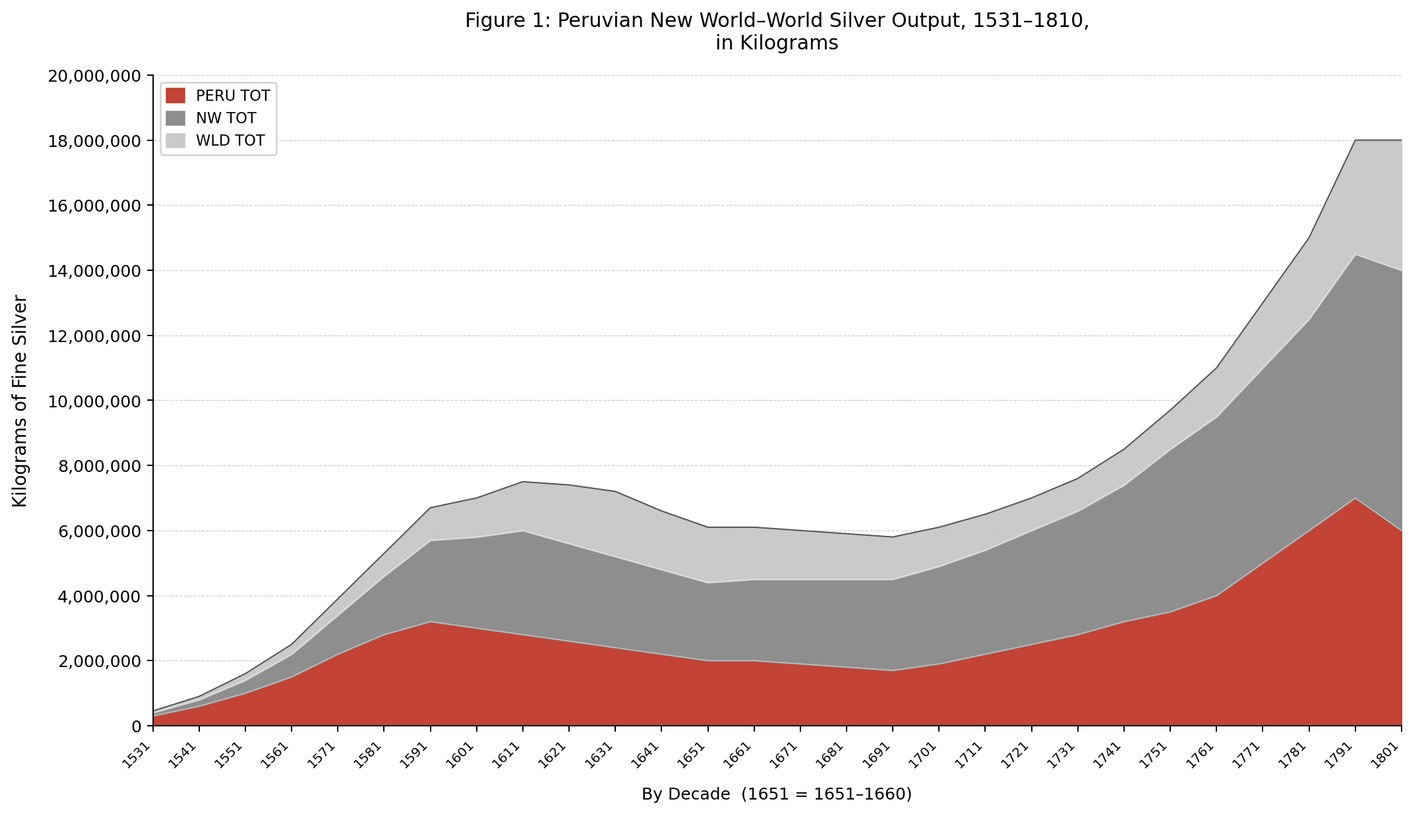
Source: https://www.scribd.com/document/442439342/A-New-World-Of-Golden-And-Silver
Viceroy Francisco de Toledo set up the major economic driving reforms in the 16th century, such as the Spanish reformed mita, alcabala tribute, and the dynamic between kurakas and corregidors. The 17th century brought great wealth to the Viceroyalty. However, as shown in Figure 1, by the end of the 17th century, mineral production had waned, due to the rise of large, centralized extraction in rich mines, diminished indigenous labor, and the need for new technology for deeper mineral extraction. The Bourbon dynasty of the Spanish Empire (1700-1808) brought reforms such as increased mita-based labor and the development of more efficient technology for extracting minerals, beginning an economic recovery in the early 18th century. Beginning in the 1730s, Peru’s mines and silver production regained their previous strength, and production peaked just a few years before Túpac Amaru II’s rebellion. The economic increase correlated with the rise in tribute income and trade (see Figures 2 and 3), as well as the value of bullion production (see Figure 4). Arguably, using those measures as indicators, a wealth pump had developed in less than 30 years.
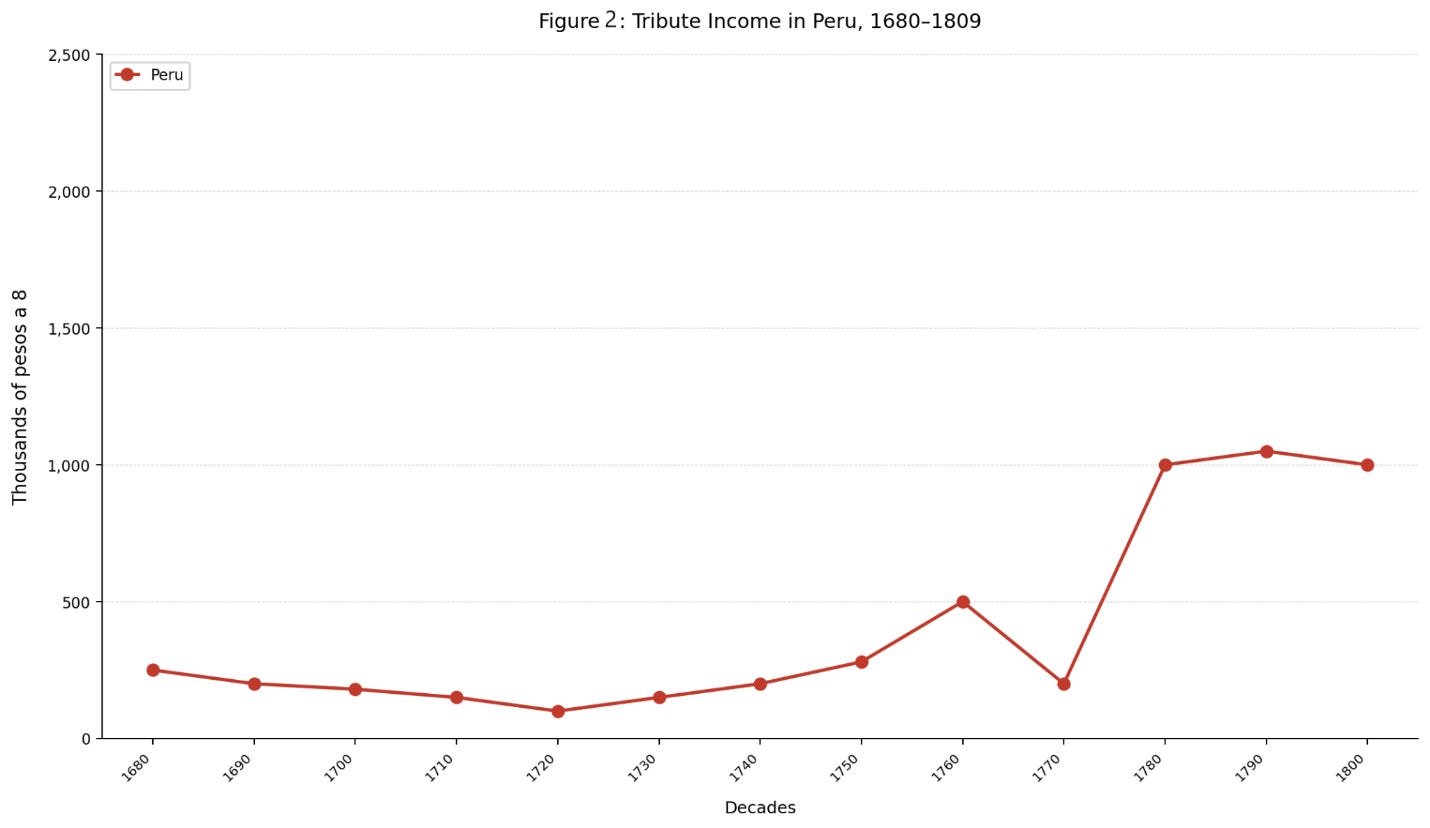
Source: https://doi.org/10.1017/S0212610900004870
Historical evidence indicates that few decades before Túpac Amaru II’s rebellion, the legal, social, and material structures undergirding forced labor at the Potosí mines in Peru had never been stronger. The forced trade, or reparto, under the monopoly of the corregidores was probably the chief factor of the indigenous population’s immiseration. Verified reports from 1785 by Jorge de Escobedo y Alarcon, the Visitador General de los Tribunales de Justicia y Real Hacienda de Lima and Visitador to the Real Audiencia of Lima, document that the total amount of forced sales to indigenous peoples was 4,272,040 pesos. In his analysis, he calculated that the necessary items were only 2,518,000 pesos, meaning a 69% profit margin for the corregidores representing items of no need, value, or use. Source: https://revistas.cultura.gob.pe/index.php/historiaycultura/article/view/272 In a practical example, the reparto of Corregidor Arriaga, later executed by Condorcanqui, generated approximately 300,000 pesos, or three times the value of the legal arancel, or “fee,” paid to a corregidor. The wealth pump bolstering such sums began in the 1730s, after a resurgence in mita-based labor, higher taxes, new laws, and, above all, the reparto system imposed by the new Visitador Antonio de Areche on the indigenous population. All those developments were spearheaded by the corregidores, above the kurakas, who reported directly to the Spanish crown. As a result, the corregidores rapidly became the wealthiest elite in the Viceroyalty of Peru.
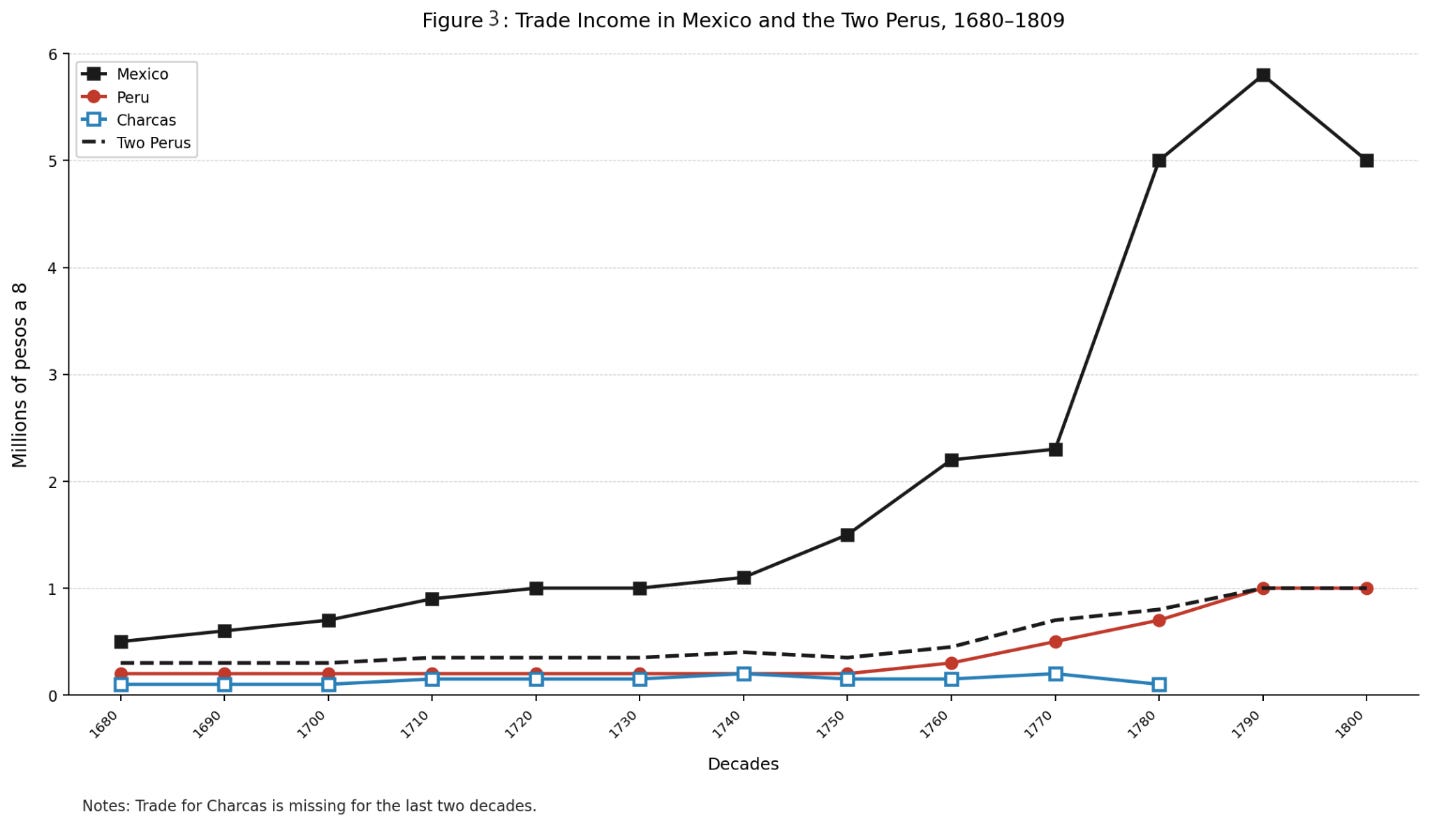
Source: https://doi.org/10.1017/S0212610900004870
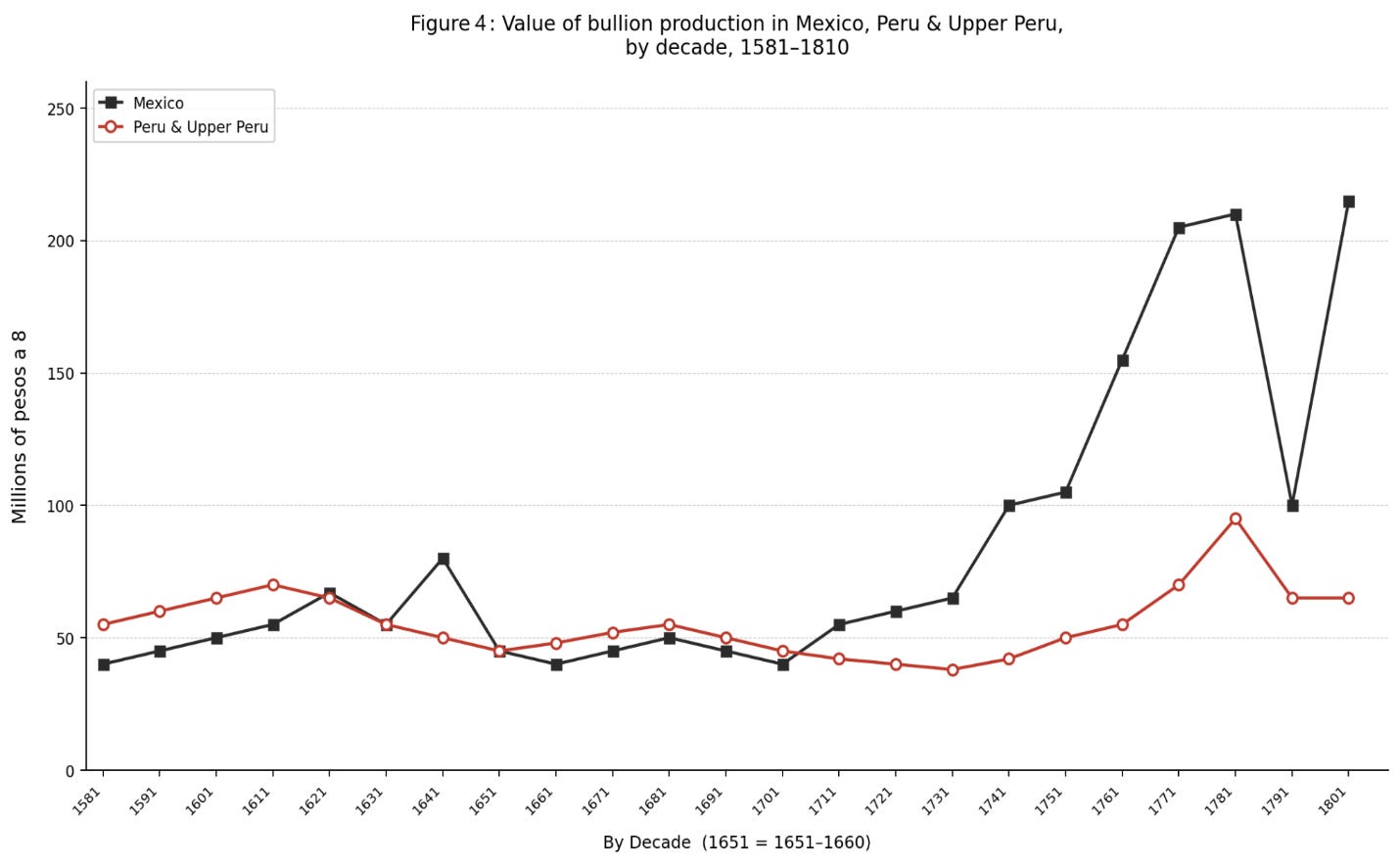
Source: https://doi.org/10.1017/S0212610900004870
Kurakas in Peru had existed since the Inca Empire, when they served as governors and tribute collectors in certain regions. Such status continued under the Spanish system, in which kurakas became representatives and administrators of indigenous communities in the Viceroyalty, largely as figures that the Spanish could use to maintain authority over and the loyalty of the indigenous population. However, as Túpac Amaru II’s rebellion revealed, the system collapsed. By the mid-1700s the concept, role, and legitimacy of the kurakas had been altered to the point where the position bore little resemblance to its Incan predecessor. In the Inca Empire, the role of kuraka was a hereditary official tasked with settling disputes, establishing tax contributions, serving as a religious authority, and leading their respective group. Although kurakas enjoyed relative privileges under Spanish rule, they did not hold political power in the Royal Courts, as exemplified both when Condorcanqui was denied the title of Marquis of Oropesa despite his royal Inca lineage and in his request to abolish the mita and reparto systems. By 1750, there were approximately 2,000 kuraka lineages across the Viceroyalty of Peru that controlled the collection of tribute from approximately 600,000 indigenous tributaries. Source: https://doi.org/10.3989/aeamer.1992.v49.i1.545 By that time, the hereditary kurakas had experienced a crisis; many hereditary chiefs had been displaced by non-noble appointees to collect tribute, and the number of kurakas elected by Spaniards had risen, thereby creating a surplus of members to compete for the few available seats designated to provinces and land—in terms of SDT, a classic example of elite overproduction. Moreover, as mentioned, the tribute income had increased since 1730, with a more marked increase from 1770, which coincided with the flattening or even lowering of total expenditures in Peru compared with 1750. Beyond that, a high mortality rate among mita laborers emerged at the same time as heightened pressure in tax payments, debt, land and labor, especially in the so-called mita corridor, a strip in southern Peru where most Andean labor came from.
In the 18th century, Peru showed signs of the three pressures identified by STD that lead to political instability: elite overproduction, popular immiseration, and fiscal pressures. Conflicts between the corregidores and kurakas became increasingly common, and as a result of the factors mentioned earlier, more than 62% of all the revolts in colonial Spanish America occurred between 1700 and 1810, 32% of which took place after 1750, mostly in the central and southern highlands of Peru. Source: https://doi.org/10.1017/S0023879100031551 Such uprisings were not solely caused by the fiscal changes of Visitador Areche, which were implemented only in 1777, but were based on other factors, including a stronger mita system and widespread mistreatment of commoners. The prior revolts had been minor, whereas the Juan Santos Atahualpa rebellion in the 1740s was a major precursor to Túpac Amaru II’s rebellion and a successful one at that. Due to internal instability, the military of the Viceroyalty grew. In 1760, the number of fixed and veteran troops was 591, and the state militia officially contained approximately 4,200 soldiers. By 1776, the number of fixed troops and the state militia rose to 810 and 96,931, respectively. The number of soldiers in the royalist army peaked with the punitive expedition sent from Lima to face Túpac Amaru II in 1781. Source: https://doi.org/10.1215/00182168-56.1.31
Despite the extent of the Tupac Amaru Rebellion, it did not become a radical revolution. The Spanish Empire struggled to suppress this large revolt, taking about three years. Many of the rebellion’s leaders, such as Tupac Amaru II, were executed or imprisoned. While it did not develop into a revolution, it did shape Andean society, with the abolishment of the kuraka, corregidor, and reparto. But this was in the long term, as the identity of the indigenous people was stripped by the Spanish, such as indigenous languages, art, music, or history accounts destroyed. The structural-demographic theory, thus, accurately represents the Tupac Amaru Rebellion in a way that has not been described before, helping understand the conditions, factors, and intentions of Tupac Amaru II and the socio-economic landscape of colonial Peru. The combination of the wealth pump, competing elites, and state-initiated reforms led to one of the most significant events in Peruvian history. Kuraka’s competed for power with the corregidores, while channeling populae discontent due to immiseration. Elite overproduction and fragmentation were the structural-demographic theory’s biggest driving factors, which led to the Peruvian instability in the 18th century. The outcome, the abolishment of reparto and the kuraka-corregidor system, which was replaced by the intendant system, altered the social landscape of the nation emerging into its independence movement of the 19th century, a landscape that is still visible today.
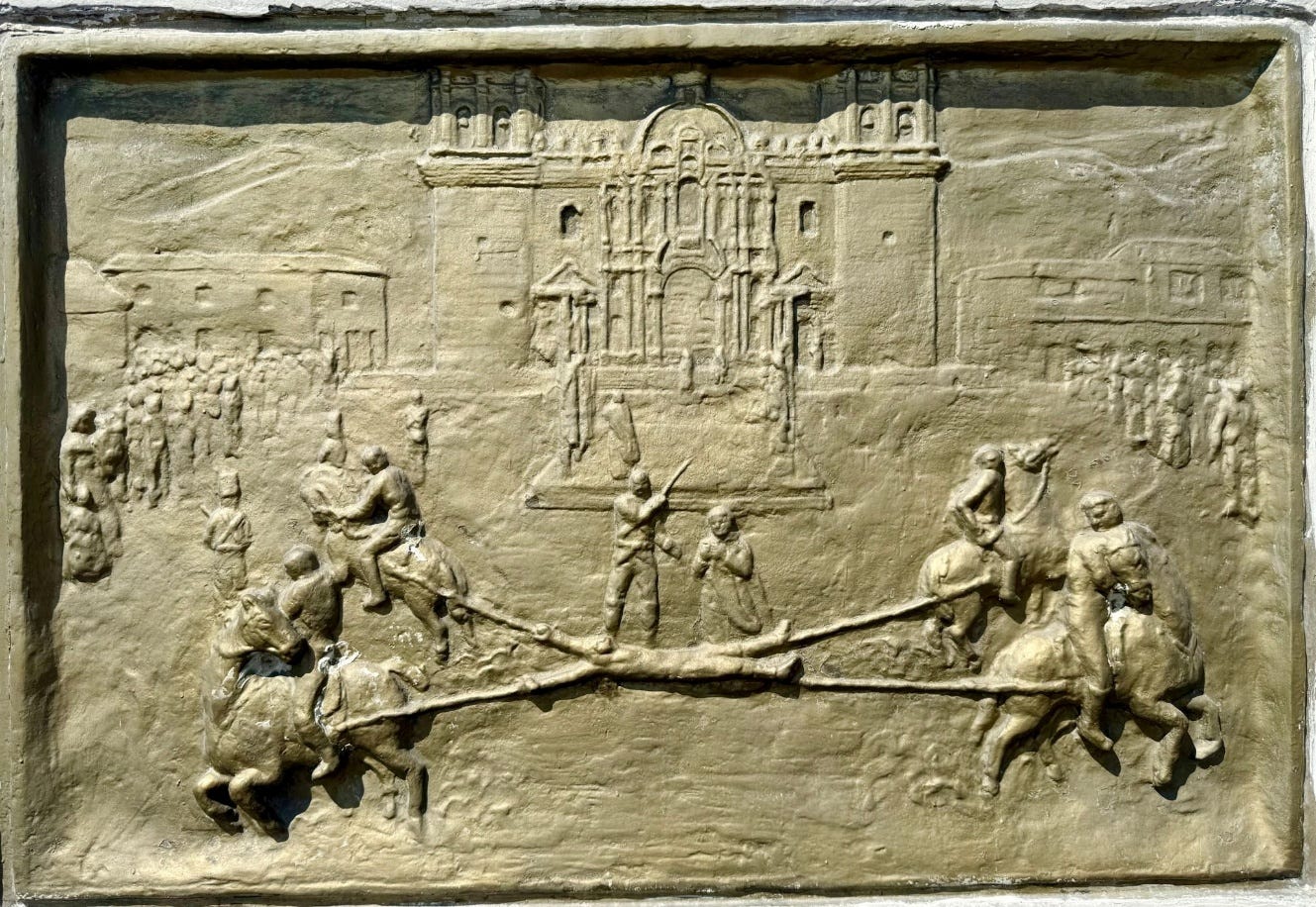
Monument of the execution of Túpac Amaru II, in the Plaza Túpac Amaru, Magdalena del Mar, Lima-Peru
Key References
Campbell, Leon G. “Recent Research on Andean Peasant Revolts, 1750–1820.” Latin American Research Review 14, no. 1 (1979): 3–49. https://doi.org/10.1017/S0023879100031551 (Page 4)
Campbell, Leon G. “The Army of Peru and the Túpac Amaru Revolt, 1780–1783.”Hispanic American Historical Review 56, no. 1 (February 1976): 31–57. https://doi.org/10.1215/00182168-56.1.31 (Page 36)
Klein, Herbert S. “The Great Shift: The Rise of Mexico and the Decline of Peru in the Spanish American Colonial Empire, 1680–1809.” Revista de Historia Económica / Journal of Iberian and Latin American Economic History 13, no. 1 (1995): 35–61. https://doi.org/10.1017/S0212610900004870
Moreno Cebrián, Alfredo. Un Intento De Reinstaurar Los Repartos De mercancías a Los Indios Del Perú: D. Jorge De Escovedo Y Alarcón. Historia Y Cultura, No 10(diciembre):119-34, 1977 https://revistas.cultura.gob.pe/index.php/historiaycultura/article/view/272
O’Phelan Godoy, Scarlett. “Rebeliones andinas anticoloniales: Nueva Granada, Perú y Charcas entre el siglo XVIII y el XIX.” Anuario de Estudios Americanos 49, no. 1(1992): 395–440. https://doi.org/10.3989/aeamer.1992.v49.i1.545
TePaske, John J. A New World of Gold and Silver . Edited by Kendall W. Brown. 1st ed. Leiden: Brill, 2010 https://www.scribd.com/document/442439342/A-New-World-Of-Golden-And-Silver
Turchin, Peter. Ages of Discord: A Structural-Demographic Analysis of American History . Chaplin, CT: Beresta Books, 2016.
Walker, Charles F. The Tupac Amaru Rebellion . Cambridge, MA: The Belknap Press of Harvard University Press, 2016