Does China Covet Siberia?

Follow into
Save into
Follow into
There were a lot of good questions for me at the business and investment conference in Boston last week. One such question arose in the context of our discussion of the shifting geopolitical landscape, with China, Russia, and Iran gaining more influence at the expense of the United States (see The Deep Roots of Today’s Geopolitics). We were discussing the strengthening alliance between Russia and China, and the question was, but how could Russia trust China not to take over Siberia?
My answer is that, as long as Russia has a strong state, there is no chance that China would even consider such a move. Yes, China has a huge population, but it’s declining — thus, there is no population pressure to expand to new territories. Furthermore, the vector of Chinese expansionism from the Yellow River core, since the Han Dynasty times (that is, from more than 2000 years ago), was always to the South. The only reason that Manchuria is now part of China is that it was Manchuria that conquered China, not the other way around (see the Manchu conquest of China).
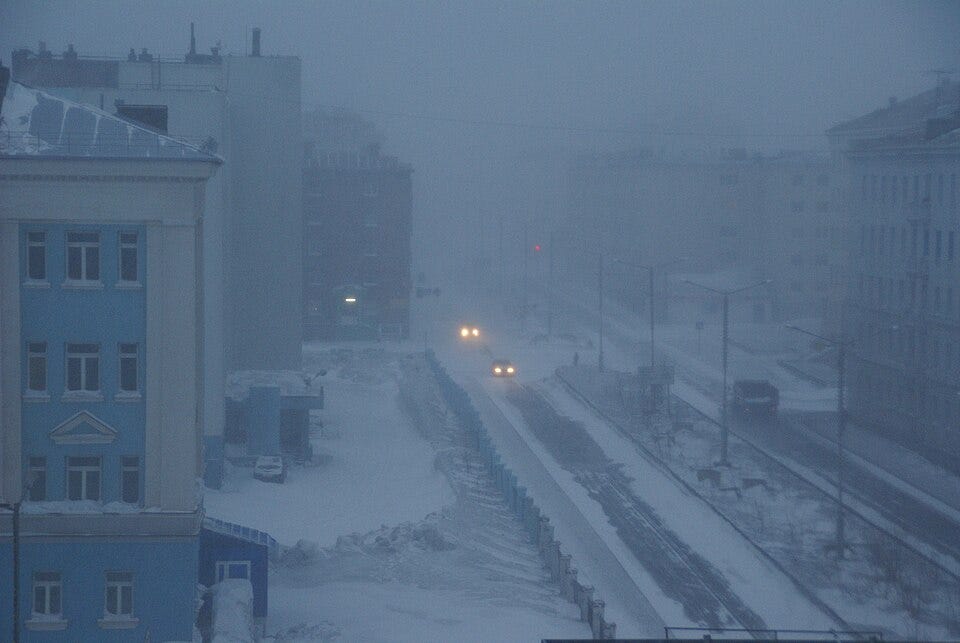
Yes, Siberia is a treasure trove of natural resources. But Westerners can’t understand how harsh is its climate. Extracting and transporting natural resources from Siberia was a huge, and under-appreciated, challenge that the Soviet Union successfully addressed. The Chinese are very pragmatic people, and it is much more lucrative to purchase all they need from Russia, compared to attempting to conquer it. And then Russia has an abundance of nuclear weapons, let’s not forget that.
Back in the 1990s and early 2000s, I remember discussions with my Russian friends and colleagues, in which they expressed fears of Chinese encroachment, whether by military action, or by population diffusion. My answer then was as it is now.
There are between 200,000 and 300,000 Chinese in Russia east of the Urals. The great majority of them are temporary workers. In fact, as economic opportunities became more attractive within China, the numbers of Chinese in Russia have declined (see Why Forecasts of a Chinese Takeover of the Russian Far East Are Just Dramatic Myth).
Partly as a result of this, the mood in Russia has undergone quite a shift. The fears are gone; instead, there is a new fascination with China as a growing economic — and cultural — power. Having traveled recently in China and in France (and earlier this week in New York City) it is very easy for me to understand the new fascination of Russians with China. Shanghai and Shenzhen are beautiful, well-kept cities, while Paris and New York look shabby and there are obvious signs of decaying infrastructure. And it didn’t help that Russians don’t feel welcome in Europe any more.
Volodymyr Ishchenko recently posted a note on the reorientation of Russian elites toward China’s hegemonic appeal. He cites an article of Alexander Gabuev (who is also the first author on the paper I referenced above). An emblematic example of this reorientation is provided by children of Putin’s spokesperson, Dmitry Peskov. His elder daughter learned French (and spent years living in Paris), while his younger one is learning Mandarin.