Altruism is an odd thing. It’s inculcated into us as children, yet many people seem to discard it as soon as they become adults. But is there any way to boost altruistic behaviors?
Nautilus Members enjoy an ad-free experience. Log in or Join now .
New research published recently in PLOS Biology from cognitive scientists at the East China Normal University suggests there might be.
To investigate, researchers tasked 44 participants with playing a game called Dictator, where one person makes a decision about how to split a monetary prize with another person that they both keep. The “dictator” can take the entire sum of money for themselves, leaving nothing for the other person, or divide it up however they see fit (there’s a reason this game is only played in psychology labs).
ADVERTISEMENT
Nautilus Members enjoy an ad-free experience. Log in or Join now .
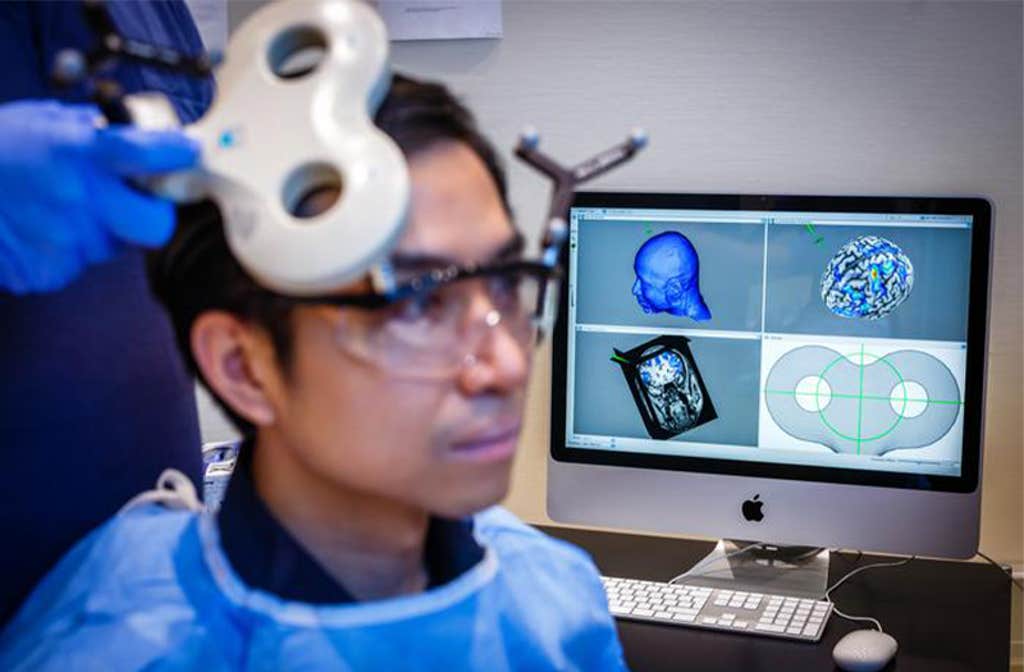
BRAIN WAVES: Here, a participant receives non-invasive brain stimulation during the experiment. Photo by Nicolas Zonvi.
As the participants played the game, researchers used transcranial alternating current stimulation to coax two areas of their brains to work together: frontal regions, which are involved in our conception of others’ interests, and parietal regions, where we integrate information to trigger a decision.
They found that altruistic behavior—that is, dictators offering more money to their fellow players, even when they stood to gain less—increased when they were gently zapping these two brain regions.
ADVERTISEMENT
Nautilus Members enjoy an ad-free experience. Log in or Join now .
Read more: “James Doty’s Helper’s High”
“We were struck by how boosting coordination between two brain areas led to more altruistic choices,” study co-author Marius Moisa said in a statement. “When we increased synchrony between frontal and parietal regions, participants were more likely to help others, even when it came at a personal cost.”
Going forward, the team has identified several paths future research could take, including recording brain activity in the regions during trials as well as investigating possible clinical applications for those with disorders characterized by a deficit of altruism.
ADVERTISEMENT
Nautilus Members enjoy an ad-free experience. Log in or Join now .
Maybe we can all cooperate a little better if we can just get the different parts of our brains to cooperate, too. 
Enjoying Nautilus? Subscribe to our free newsletter.
Lead image: Natalya Kosarevich / Shutterstock
ADVERTISEMENT
Nautilus Members enjoy an ad-free experience. Log in or Join now .