the revelations
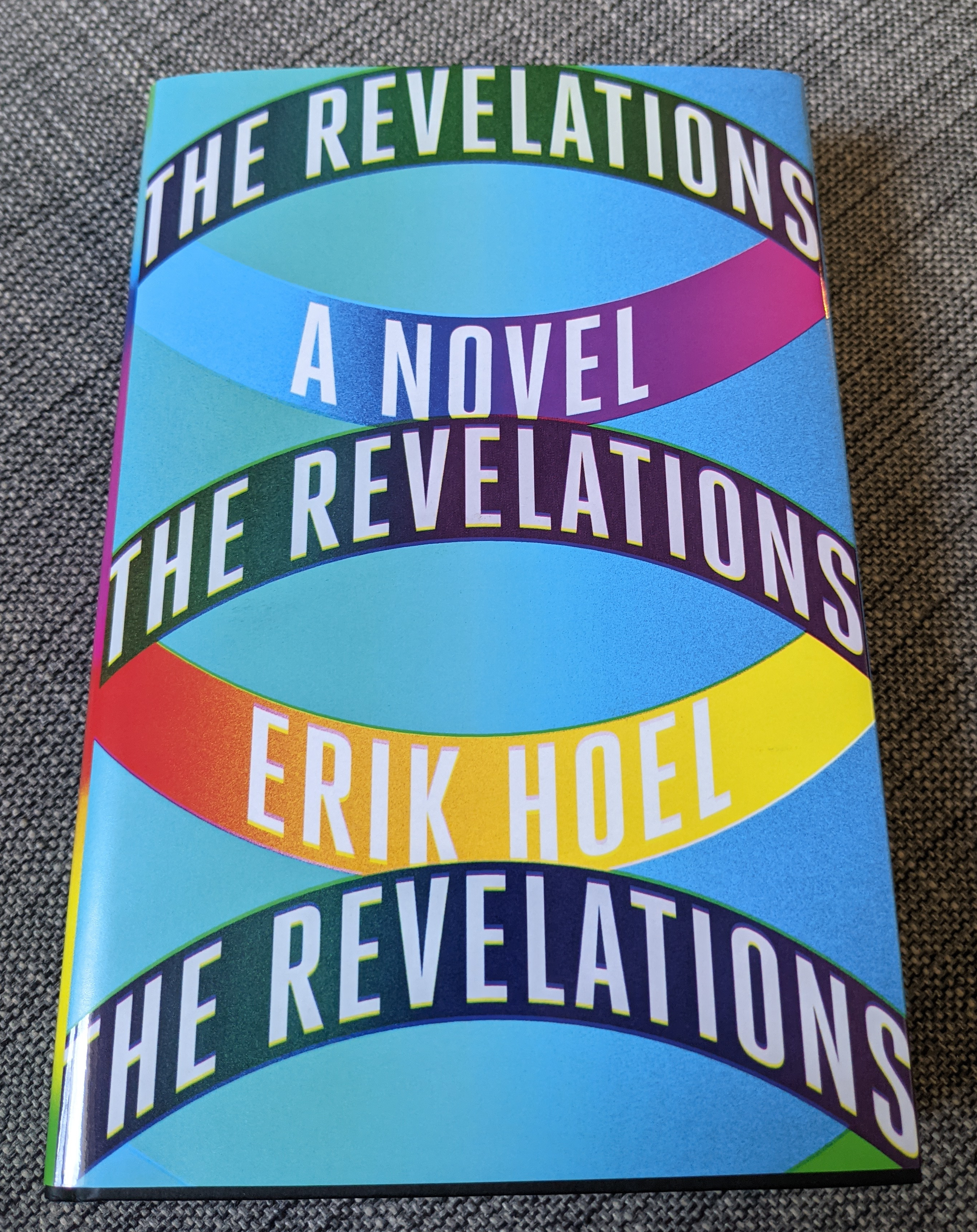
a few weeks ago my copy of “the revelations” by erik hoel arrived. here I relate some of the subjective experience of reading the book, with an eye on pointing out particularly enjoyable turns of phrase, allusions, and decoding the signals I received. I was primed to read this book by the swarm of memes around Hoel.
my experience of this book is one of being drawn down a funnel. the mouth of this funnel for me was the article “enter the supersensorium”, which introduces some of hoel’s own research into neuroscience and some conclusions that reasonably follow from it. specifically, he introduces the “overfit brain hypothesis” which draws from experiences in deep learning and applies them to biological neural networks. the hypothesis is that during the course of the day, human brains are always learning our environment. this implies that the more frequently we encounter something, the more likely our brains will estimate it to be. hoel suggests then that dreams are a mechanism for loosening this overfitting, by mixing and matching disparate sensations from the course of the day in odd ways, it surprises us, and keeps our mental models from become too rigid. hoel then takes it a step further and applies this to fiction itself, suggesting that one explanation for the human appetite for fiction derives from our desire to dream, the loosen the overfitting by getting surprising juxtapositions in stories related to us. this is a bold hypothesis. and one that is worthy of much investigation and effort to understand. it’s not just bold, but plausible, and has implications for day to day human behavior. as it is not just any fiction that can bring the benefits of dreaming for loosening the overfitting, but art. that is, works that challenge us, that are just beyond our reach, that cause us to have to reconsider existing patterns and look for extensions or exceptions.