Alevtina and Tamara and Lyonka, Oh My!
Follow into
Save into
Follow into
(As usual, click on any of the following images to embiggen. Although I really shouldn’t have to be telling anyone that.)
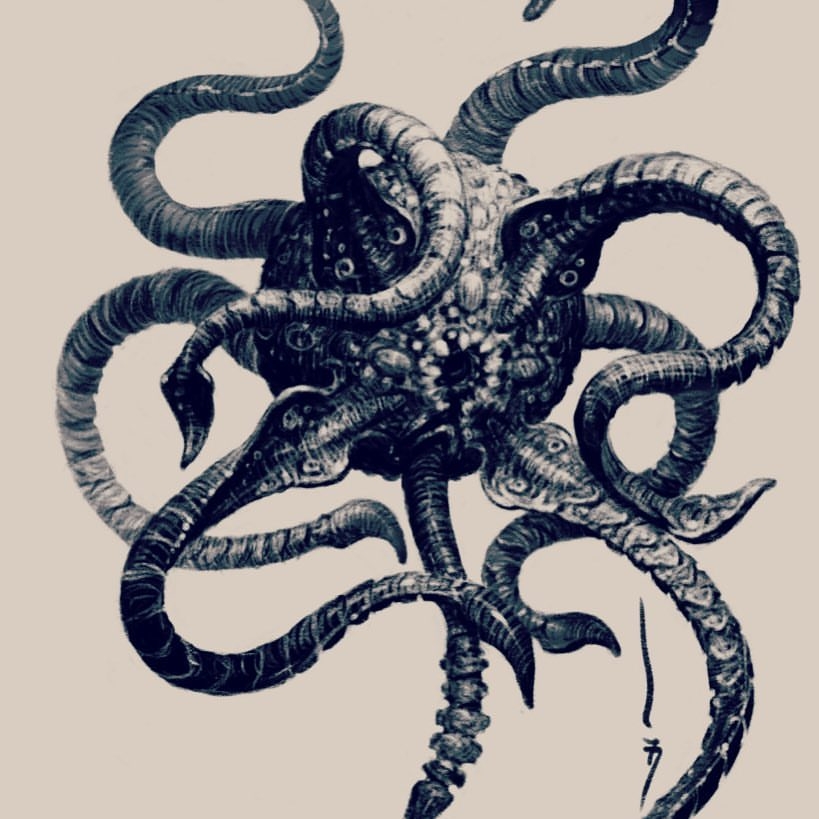
You might have seen a dude by the name of Dimitry SkoLzki hanging around the gallery hereabouts. He did these distinctive black-and-white sketches—they have an almost almost wood-cut vibe—inspired by characters and events in Blindsight (and later, Echopraxia). They impressed my Chinese publishers so much they bought the rights for their own Blindopraxia imprints.
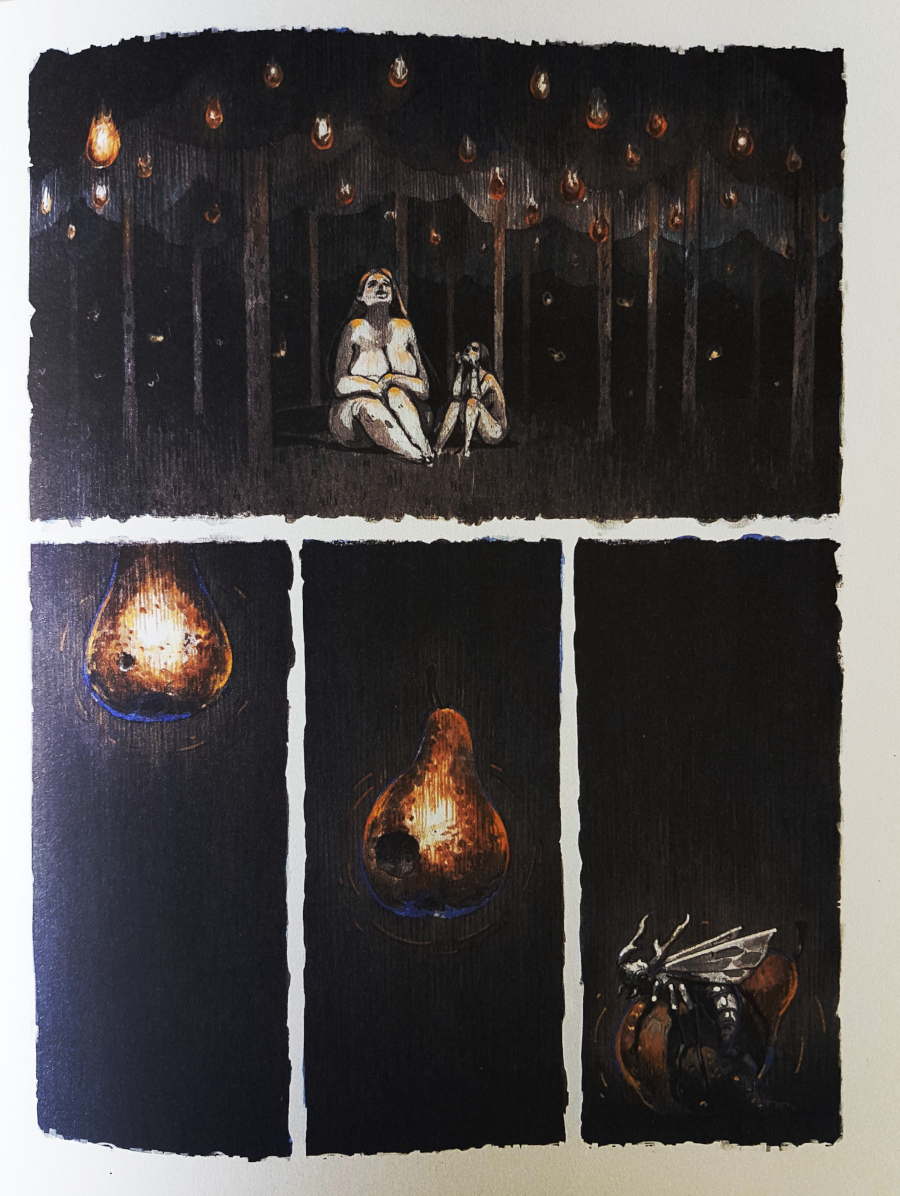
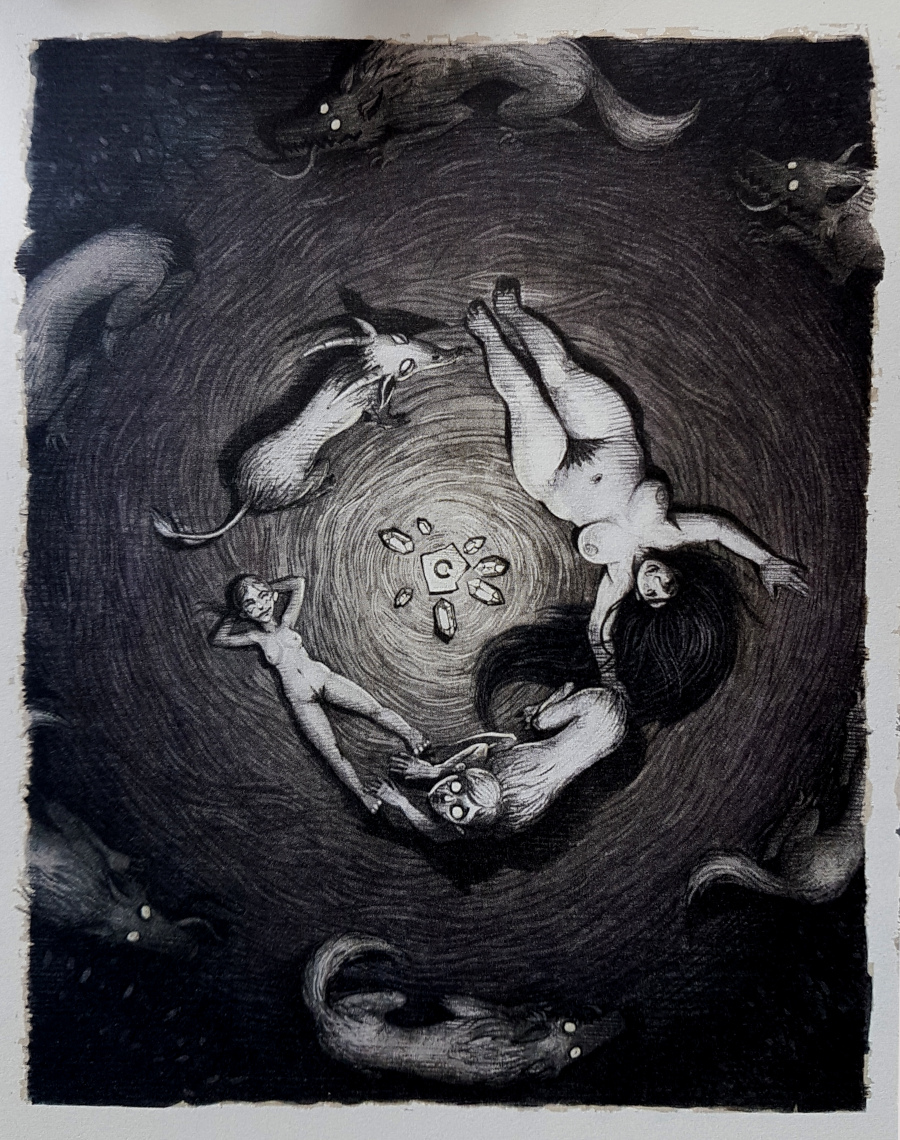
Russian by birth, currently based in Cyprus (he got the hell out of Dodge just before Putin went full-on Goon Squad), SkoLzki has recently put out a heartfelt volume of—I’m not quite sure how to describe them, exactly. Certain cultural outlets are calling it a collection of “noir fairy tales”; others call it a graphic novel. Neither description is wrong, exactly, but neither really captures the essence of this surrealistic, horrific, old-time Russian Grimm-tales volume. Limasol Today says that it’s about “the author exploring his inner worlds and the depths of his personality through metaphors and symbols.” Dmitriy tells me that it was forged against a backdrop of “longterm depression” (to which I can only say, Dude, if you could pull off something like this when you’re depressed, I can barely imagine what you could come up with when you’re ecstatic). The phrase “mystical noir illustrated tales” has been bandied about.
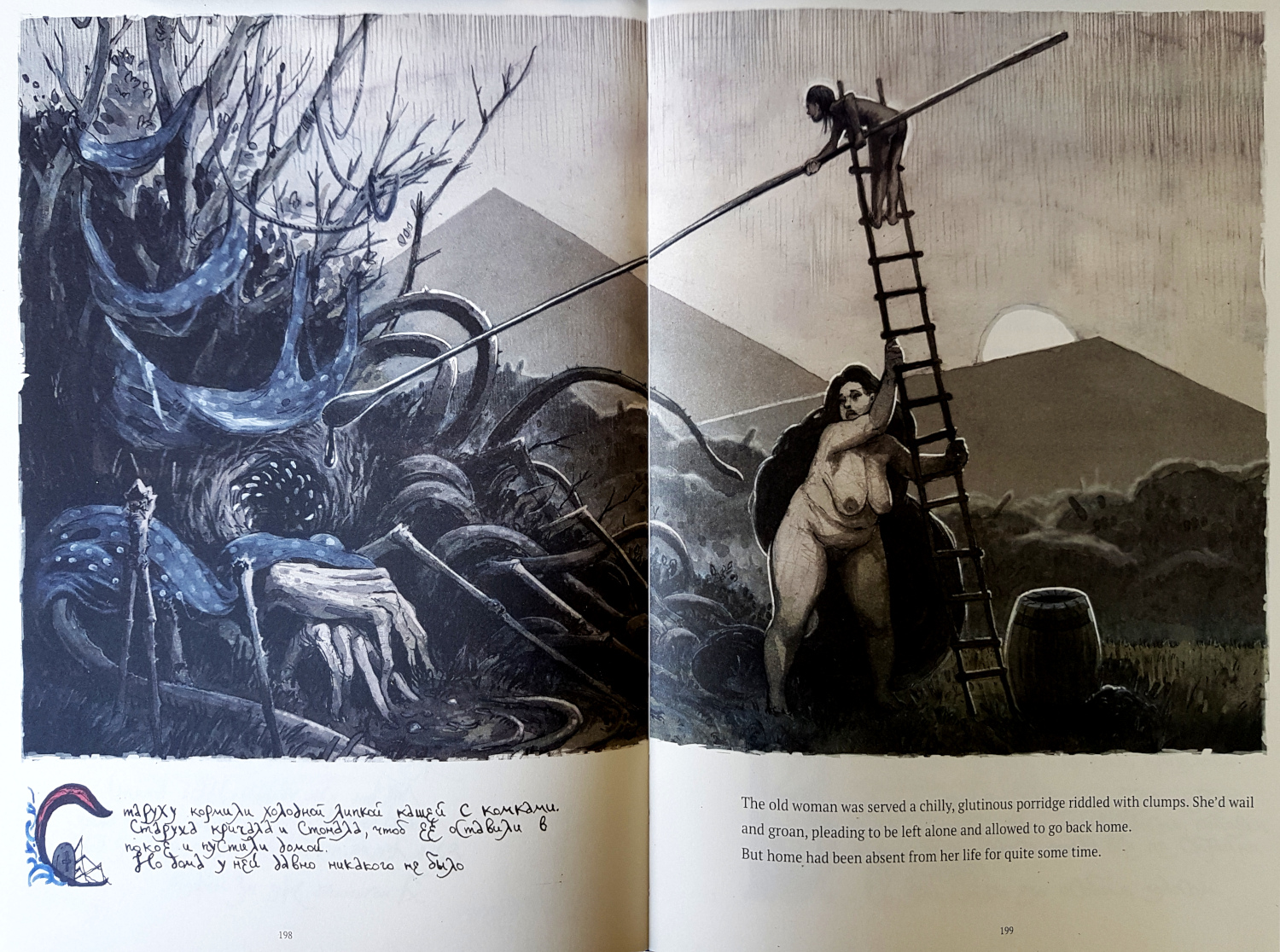
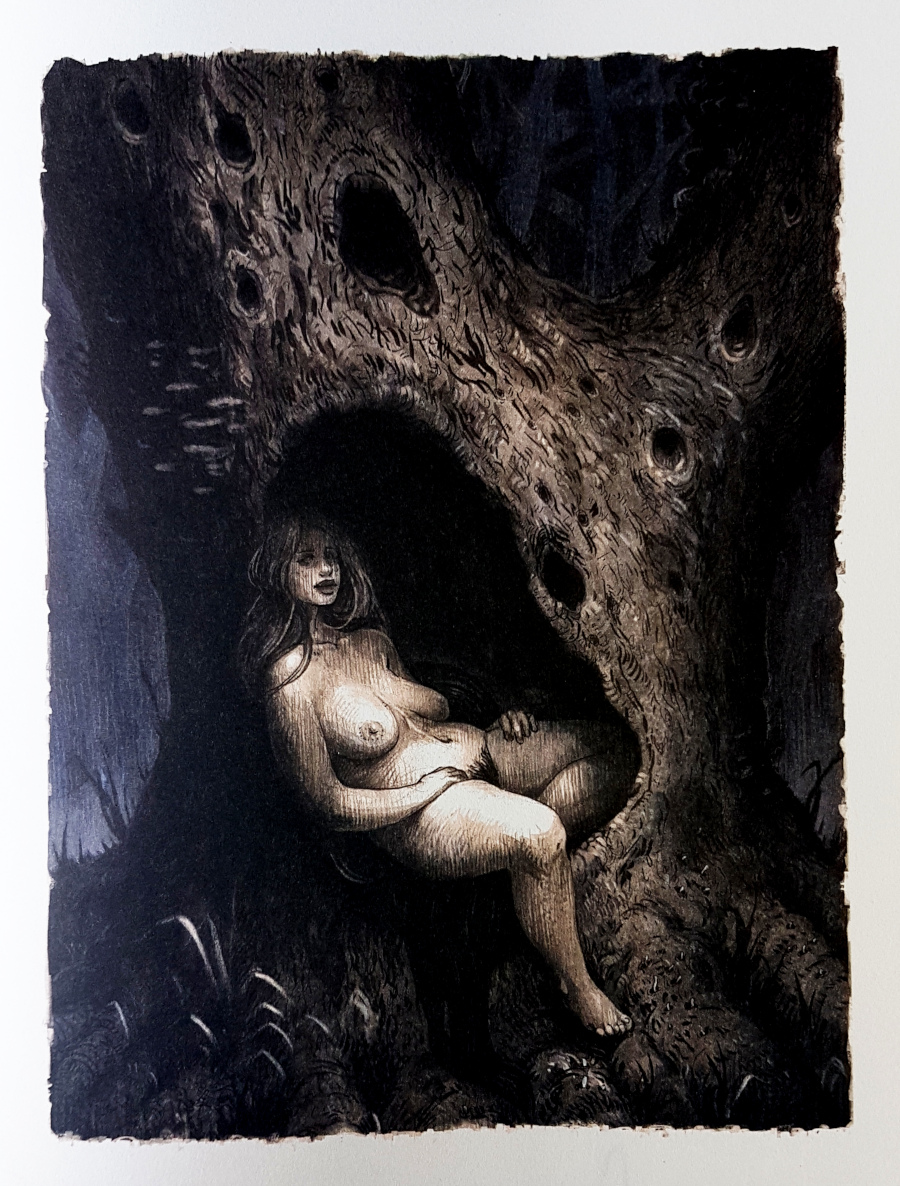
What we’re looking at is an interlocking series of nearly a hundred vignettes clumped together into five larger—I’m going to call them dream tales—across 227 pages. The balance between word and picture varies from leaf to leaf. Sometimes a mural sprawls across two facing pages with barely three lines of text to accompany it; other times a whole page of cramped handwriting has to stand on its own without so much as a stick figure for support. The balance between light and dark is a lot more consistent: darkness always wins, even in the happy bits.
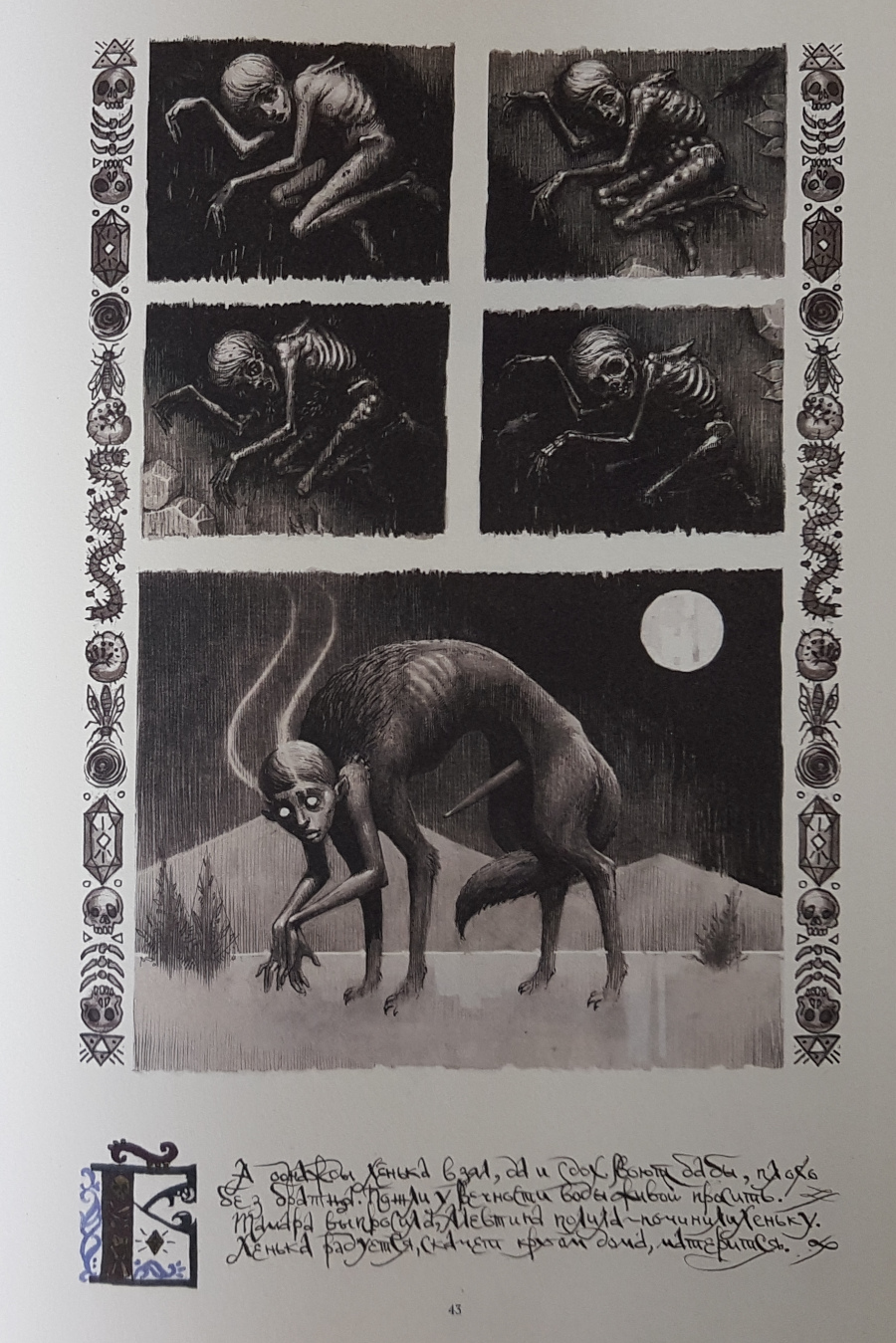
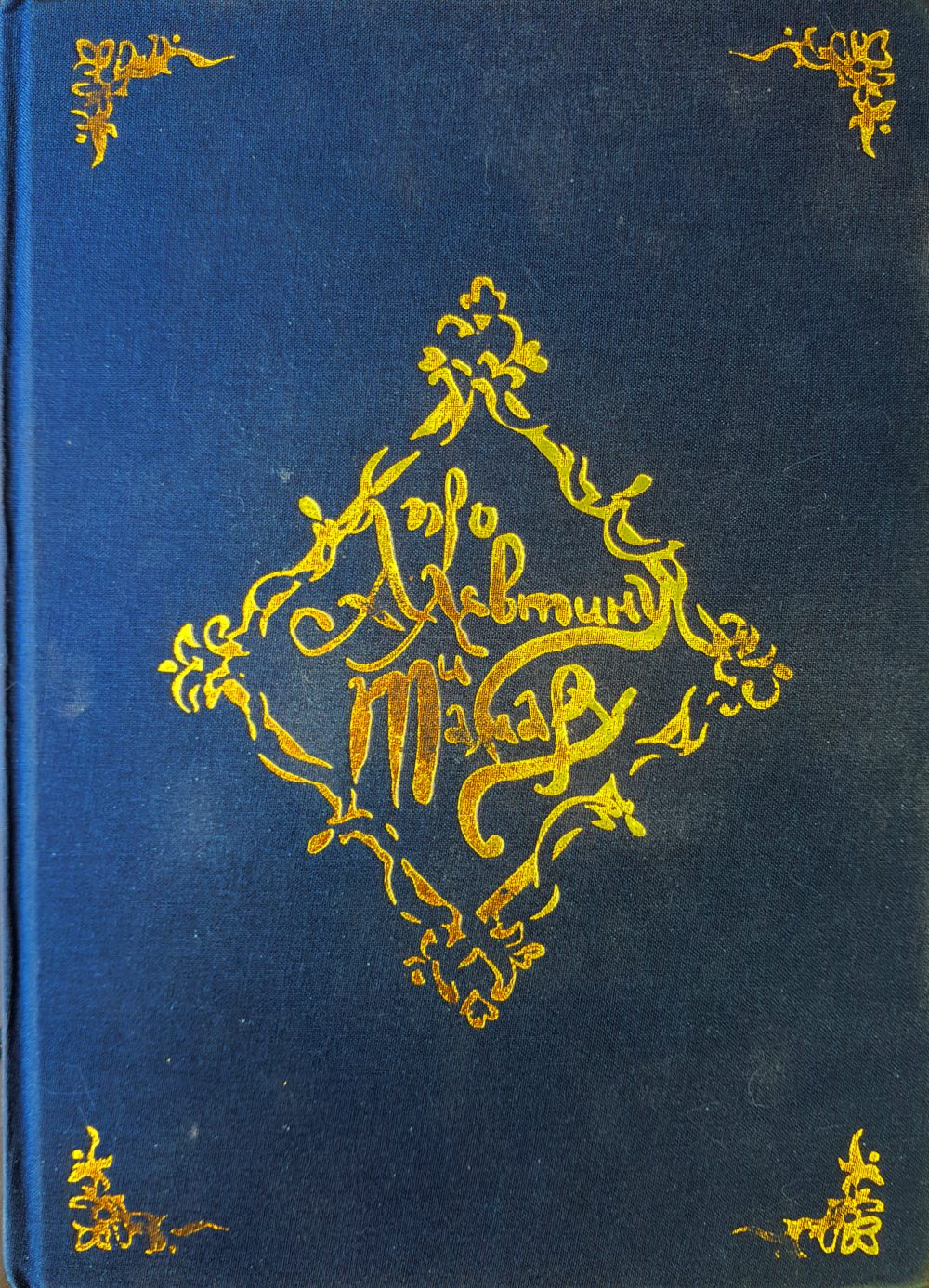
The volume is titled Alevtina and Tamara, but— while those two sisters are omnipresent throughout— the stories really orbit around their brother Lyonka. Lyonka dies pretty much out of the gate (he’s a sickly child who likes beetles) but quickly resurrects and lives out the rest of the book as some kind of hyperphallic goat-human hybrid. A mother figure the size of a mountain breezes through the woods now and then; predators and prey are always prowling around at the edges of the page. Quests trivial and epic get wrapped up in a few lines of free verse, or abandoned halfway through when someone gets distracted by something shiny. A lot of time is spent in trees. It’s a weird, dark, disjointed, strangely innocent celebration of the macabre, East-European-mythic right down to the marrow, and I loved it.
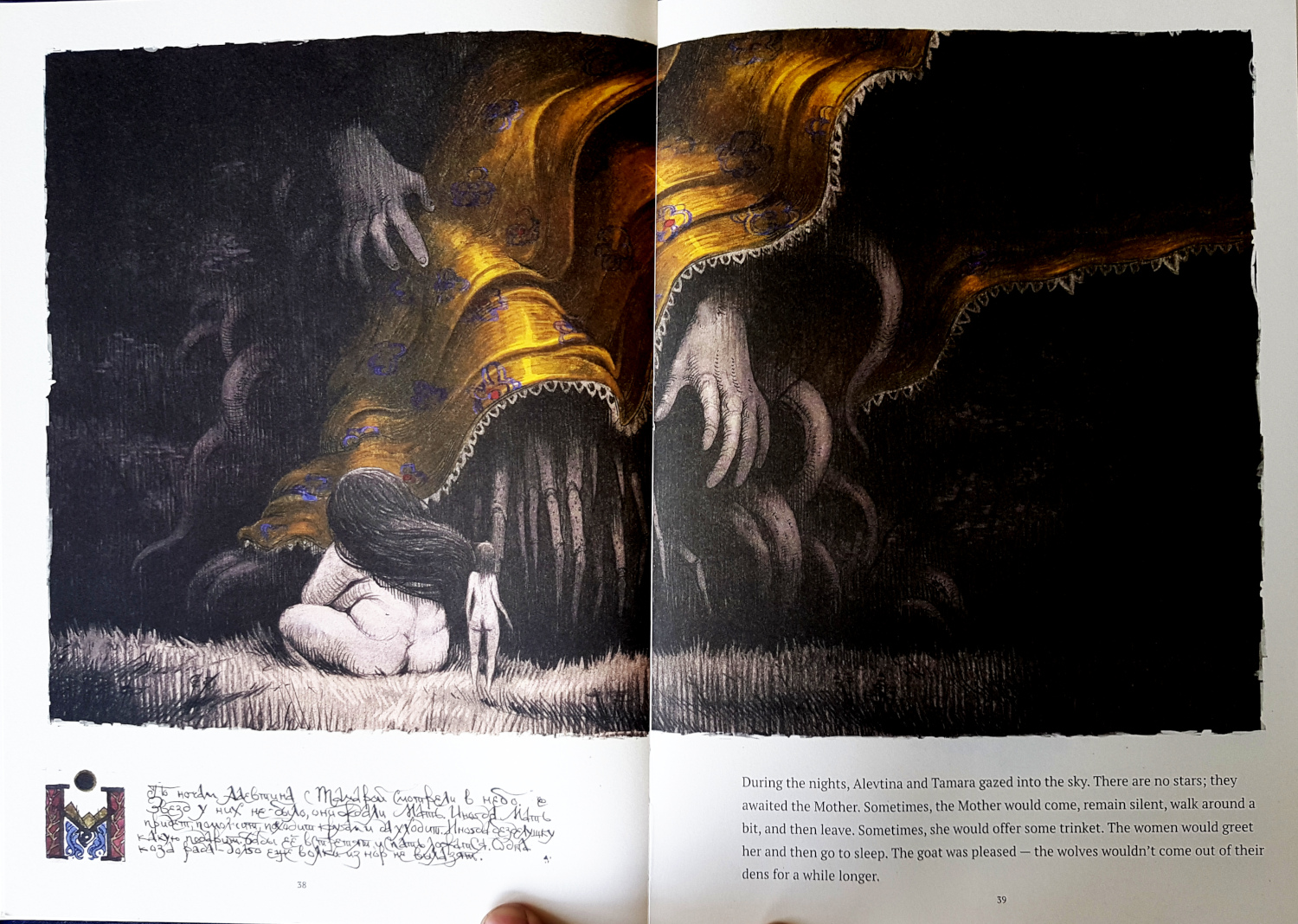
The whole thing is Dream Logic made flesh. I bet Lynch would be a fan. I bet Cronenberg would too.
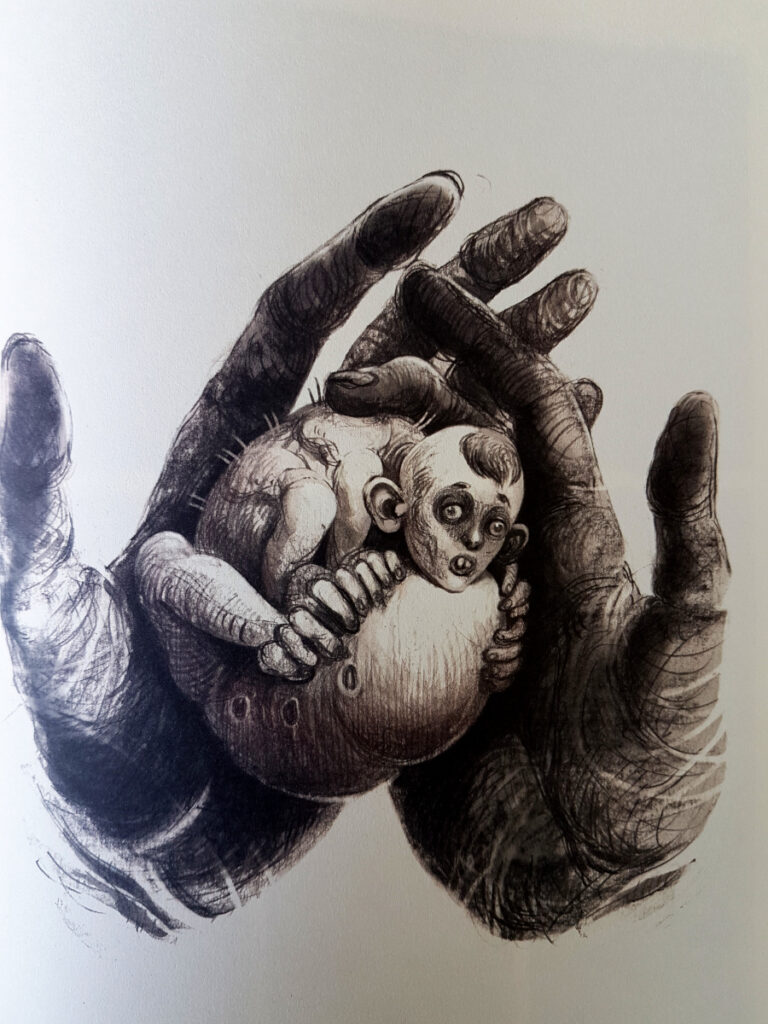
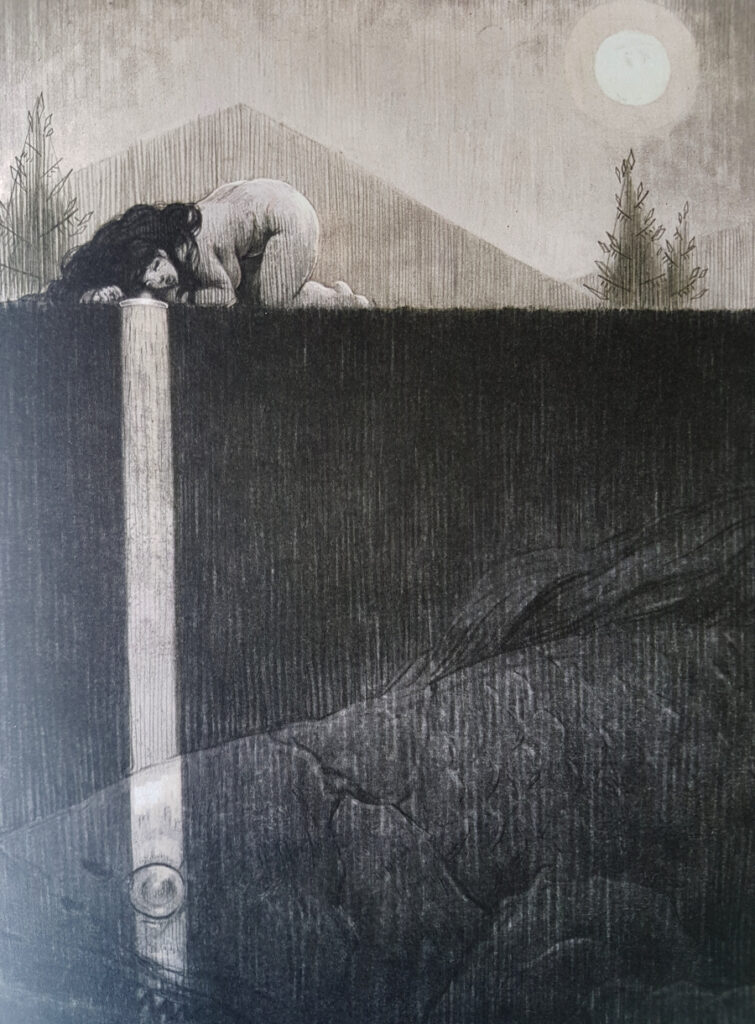
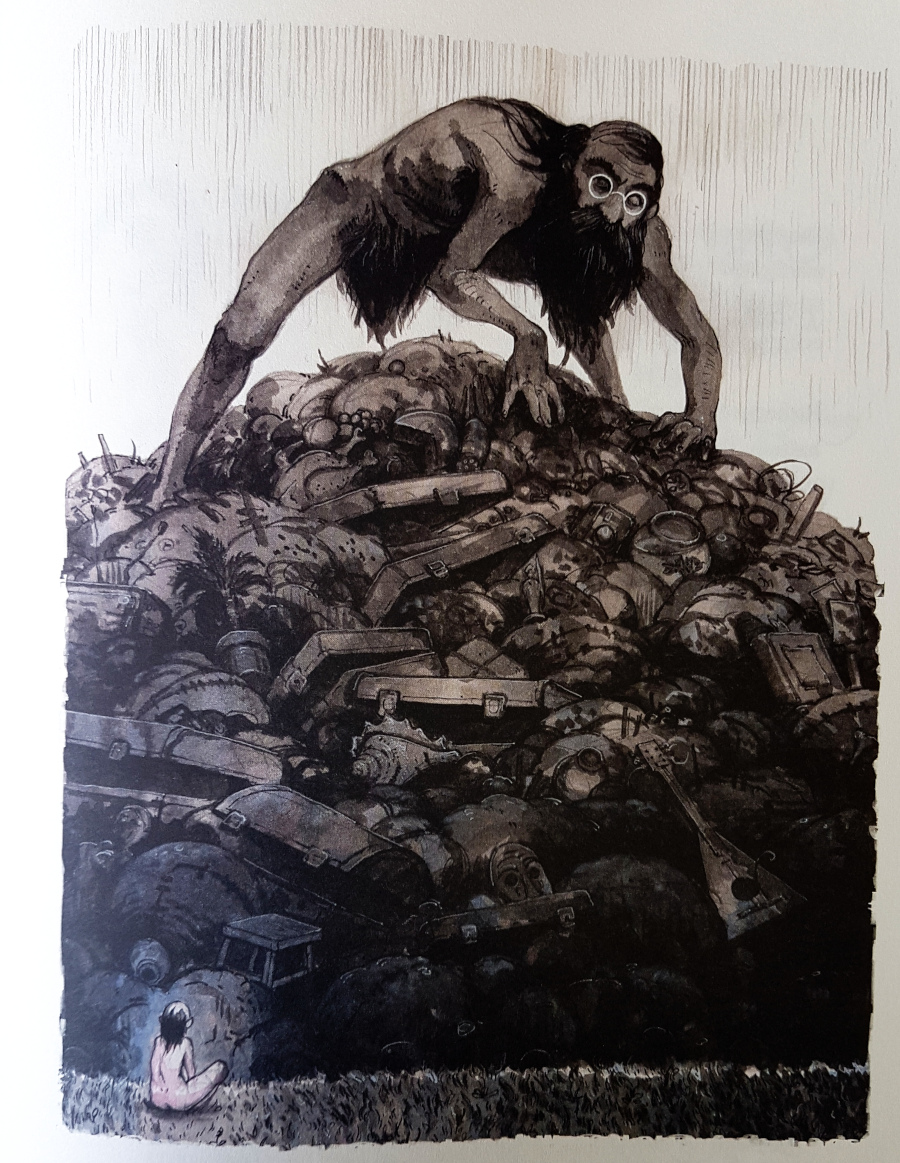
But I may be way too late sending out invitations to this party; Alevtina and Tamara came out back in April. A little like Lyonka and his sisters, I too have been pulled this way and that by various deadlines, ambitions, and emergencies (I’m still a bit soggy after slurping the pond out of our basement during the recent flooding—Climate Change finally hits the Magic Bungalow).
It’s not that SkoLzki’s work is the kind that staledates, mind you. I might even call it “timeless”, if I wasn’t so afraid of descending into cliché. But SkoLzki’s only released this thing in a limited edition of 300 beautifully embossed hardcovers; if they’re not sold out now, they might be soon.
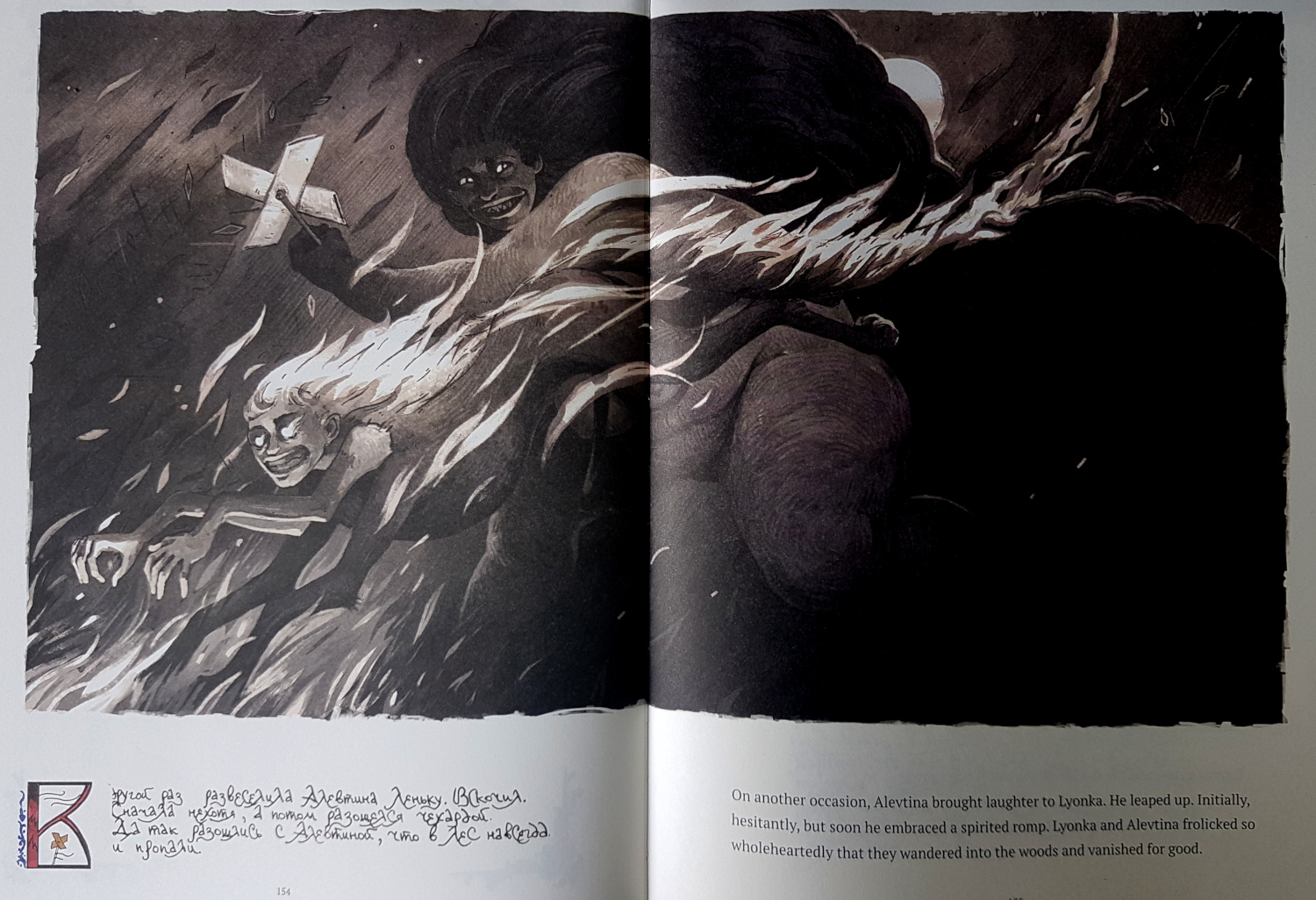
So if the renditions you’re looking at here call out to you, head over to the store and check the inventory. Alevtina and Tamara isn’t for everybody, but the people it is for really don’t want to miss out on this.