The Positively Good Man

Follow into
Save into
Follow into
Notes from the Sanatorium
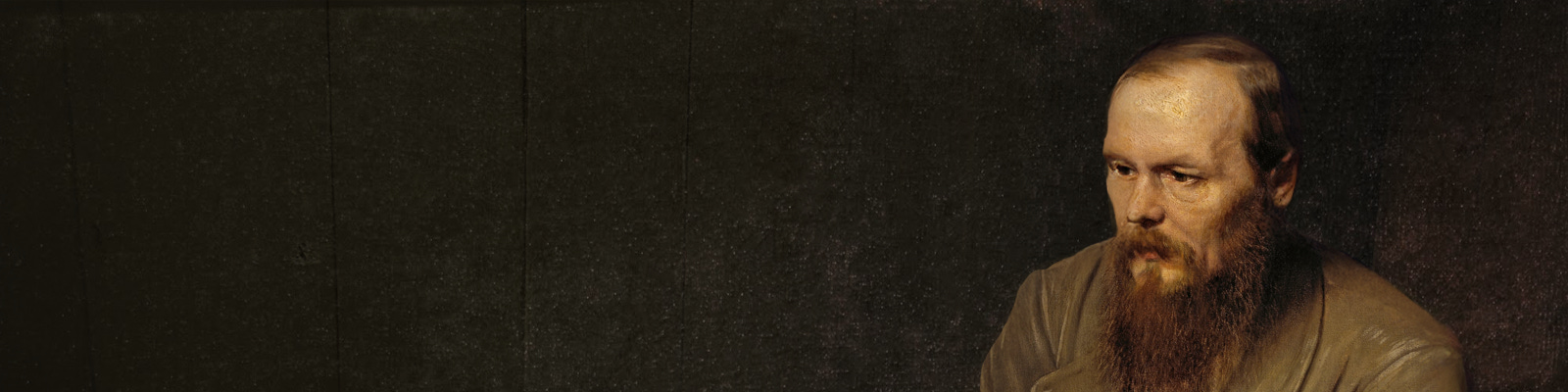
In The Idiot, perhaps Dostoevsky’s most intimately vulnerable production, the author ventriloquizes the agony of one Prince Lev Myshkin. In a letter to his poet friend, Dostoevsky said he wished to inspirit Myshkin as “the positively good and beautiful man”. He then proceeds to inhabit his good and beautiful man into our world where none are like him. In our world, people are venal, avaricious, false, and all these passionately so.
Myshkin suffers greatly for his difference. His goodness and beauty are exposed through what we today would call his empathy. He maintains a stoic resistance to allowing any affliction to prevent him performing altruistic service to those in his orbit. His posture is duty, and he endures all that follows from it with alacrity.
In one of the greatest literary expositions of such a character’s folly, by the end of the story, Myshkin has lost his mission to bring love and compassion to a corrupt society, his capacity to save or even help anyone, and finally with the murder of the woman he loves, his sanity. Everything upon which he set the gaze of his goodness passes out of his grasp. It is high tragedy.
Within the heart of the story, within the goodness of the prince, is a pearl lost to many. Again, Myshkin is animated by what we know as empathy. The conventional conception of empathy is an emperor whose nakedness no one dares notice. The missing maxim is that our empathy takes away what it claims to give and gives what it claims to take away. We can no longer afford to obscure this wisdom, no matter how good we might feel to do so.
How Empathy Became Empathy
When we say “empathy” we generally mean something like the ability to put ourselves in the place of someone else. More specifically, empathy implies feeling what someone else is feeling. There are common idioms: Walk a mile in their shoes. Understand where they’re coming from. See it through their eyes.
This word, empathy, is somewhat novel. It is supposed to have been coined in 1909 by psychologist, Edward Titchener, as a translation of the German Einfühlungsvermögen, a compound word that literally translates to something like “the ability to feel into”. This concept was explored by German philosopher Theodor Lipps who used a shortened version, Einfühlung. Lipps believed that when we enjoy, say, a painting, we are “feeling ourselves into” the painting. He believed this extended to others as well. We observe someone’s posture, expression, or movement, and we unconsciously simulate these states. He believed this inner mimicry invokes the corresponding emotion of the other person, feeling what they feel.
Lipps’ claim about empathy immediately influences people like Max Scheler, who recasts empathy as a revelation of the other as value. Edith Stein, in 1917, insists that empathy is key to an ethical life. This takes Lipps’ descriptive claim and transmutes it into a normative precondition for “ethical relatedness”. They tell us to be “good” is to “feel ourselves into” the other.
Toward the middle of the 20th century, American progressive psychology pushes this concept even further. John Dewey tells us that not only social cohesion, but democracy itself relies upon the intercession of empathy as described by Lipps. Thus, empathy is to be understood as not merely “good” but a foundation for our social order.
In the psychological theory of the middle to late 20th century, perhaps no one does more to advance the concept of empathy than Carl Rogers. Rogers demands that we understand empathy as a core therapeutic technique and a requirement for psychological safety. Empathy, he says, is a primary means by which individuals grow into their “authentic self” and is inherently non-judgmental, accepting, and warm.
“Empathy is the capacity to understand another’s experience as if you were that person.”
— Carl Rogers
It is in this moment that empathy becomes a virtue which in turn leads to the worker-management ideology of the 1970s-90s. This portrayal of empathy is also the foundation of what thinkers like Carol Gilligan called the feminist ethics of care that emerged in the last two decades of the 20th century. In this framing, empathy is found superior to what were deemed the masculine-coded concepts of justice, duty, and conflict. Gilligan saw empathy as a tool of non-violence that is primarily relational, communal, and nurturing. Through this framing, empathy becomes a critique of what had become seen as masculine systems of hierarchy and competition.
“Care is the basis of moral life, and care begins with empathic attunement.”
— Carol Gilligan
In the millennial transition, we see these ideas insinuated more deeply into corporate management theory and pop psychology. Daniel Goleman gives us “emotional intelligence”. Peter Senge talks of “learning organizations” as a means of lionizing relationality over individualism, responsiveness over abstraction, context and narrative over principles, attunement to needs, vulnerabilities, interdependence, and the ethical significance of care, connection, and emotions. To make it easily metabolized without upsetting them, Patrick Lencioni made these ideas anodyne for people in business by reducing them to otherwise artless, facile parables.
This effort turned empathy into managerial competency. Through it, empathy is depicted as the key to teamwork, the antidote to conflict, and a way to “lead without power”. Thus, empathy, while thoroughly decoupled from Lipps’ more aesthetic projection, is remade into what amounts to a deontological moral framework. To lack empathy is, in short, to be evil.
Through this lineage, empathy finds its contemporary apotheosis in figures such as Brené Brown. Brown synthesizes Rogersian therapy, Gilligan’s feminist ethics, corporate HR’s demand for soft skills, and Oprah-era therapeutic culture into a universal, moral prescriptive definition. She tells us that empathy fuels connection, is the antidote to shame, and creates belonging. For her, empathy is harmony, an egalitarian moral virtue, an antidote to power, and gives moral authority to the archetypical feminine.
This is where we are. This is how we now understand empathy. It is replete in our conception of how organizations and businesses should operate.
Scroll a feed of LinkedIn content and you will find empathy-centric thinking is the hegemonic ideology of leadership discourse. If you removed empathy-talk from LinkedIn discussions on leadership, team building, management, organizational culture, and change management, content on the platform would collapse significantly. Adam Grant hardest hit.
As it turns out, the entire edifice of this empathy project may be built on shifting sands. However genial our concept of empathy might be—or even because of it—we are overly credulous about what empathy is, how it came to be, what it has done for us, and what it can be made to do. Most of what we are taught and have largely come to believe regarding empathy is reducible to a papal bull. We’re not led to wonder about these questions. We generally don’t undertake an interrogation of our suppositions about empathy. We don’t do much beyond calling it good/warm/safe. There is more to the story.

A Modest Proposal
If empathy is to bear the moral weight we place upon it, its origins and functions must be deeper than sentiment and more exacting than kindness. If we attempt a different way of thinking, we might view the world through the assumption that what living systems need is grounded in something real. What a living system does may be more important than what we think we know about it. If our inherently moral conceptualization of empathy militates against whatever living systems do when left alone, perhaps it is our morality and not what living systems do that is a misapprehension.
If understood in a broad biological sense, one thing that all living systems exhibit is predation. Understood this way, predation is the requirement of a living system to extract order, energy, or structure from another organism or system to sustain itself. All living systems do this.
The reasons why all living systems are predatory upon other systems are challenging to summarize and vary from thinker to thinker. But generally, we can say that no physical system of which we know is in what is called thermodynamic equilibrium. This just means everything is changing. It means that energy is flowing everywhere. Nowhere have we observed anything to have settled down to a state where energy isn’t flowing.
Where there is an energy gradient (energy is flowing) the potential always exists that the energy will be exploited to do work. This is what living systems do. They extract energy from a source, use it to do work, and expel the entropy (chaos or waste) created in the process (hopefully somewhere outside the system).
Lawrence and Lee’s Inherit the Wind has its protagonist, Henry Drummond, preaching, “Darwin moved us forward to a hilltop, where we could look back and see the way from which we came. But for this view, this insight, this knowledge, we must abandon our faith in the pleasant poetry of Genesis.” Whether Darwin did what the playwrights claim, it is not without irony we wonder whether he can do something similar with empathy.
When seen in this way, the nature of the world is asking us to notice something. It is making a modest proposal. Simply, it is saying, “see this as it is, not as you wish it to be.”

The Predatory Origins of Empathy
If empathy is truly essential, it must possess heritage deeper than merely aesthetic conjectures arriving to us in the beginning of the 20th century. If it is true, as contemporaries such as Brené Brown would have us believe, that empathy is the root of both our moral reasoning, and indeed, our salvation, its bedrock must be located somewhat more distant than 1909. It should be part of our very nature.
We needn’t do much work to imagine, given we can see living systems as inherently predatory, where we might find the origin of empathy. When we see ourselves as we are and not as we wish we were, it becomes even easier to imagine that what we call empathy comes from predation. When we look at the living world, it becomes even more compelling to make this connection.
Why should we need empathy? What is it about what we are that should require empathy? By what we are led to believe we know about it, empathy exists in an interdependent relationship with collaboration. We aren’t just led, but we want to believe empathy was somehow provided to us so we might pursue mutual respect and dignity because who doesn’t want to be respected and isn’t that a lovely idea?
And yet, the more we imagine the idea empathy is a product of predation, the harder it becomes to believe the rosy rhetoric of its modern champions. Put another way, the more we grasp the predatory foundations of life, the more difficult it becomes to see empathy as unreconstructed justification for nurturing the other. When we look to the interrogations of evolutionary theorists, this distinction becomes even more ineluctable.
If we are to take empathy seriously, the simplest explanation for its origin is, indeed, predation. Think of the need for solitary predators to divine the intentions of their prey. This cognitive adaptation is an advantage. The more the predator can foresee the dispositions and strategies of its prey, the more likely the hunt will be successful. The more likely the hunt will be successful, the more likely the individual will be to pass on the cognitive tool.
Moreover, this model provides explanatory power for understanding the development of what is called “cooperation”. Rather than the common connotation of this word as something like mutual beneficence, it is the predatory nature of living systems that, through empathy, creates coordination under the aegis of leadership. Imagine hunt after hunt, a highly successful and empathetic predator notices he is in competition with another predator of the same species. He begins to build empathy for this competitor. This is not, “how do I better understand your pain so I can care for you” kind of empathy, this is “how do I better understand your dispositions so I can turn them to my benefit” kind of empathy. The purpose is to employ empathy as competitive advantage.
In their seminal work on social cognition, cheater detection, and tactical inference, evolutionary psychology researchers John Tooby and Leda Cosmides suggest empathy-like cognitive modeling originally evolved to track threats and competitors. They tell us “understanding other minds” emerged primarily to serve strategic advantage, not merely to facilitate cooperation. They are explicit that human social intelligence is shaped by selection pressures involving conflict, predation, and manipulation.
Evolutionary biologist and sociobiologist, Robert Trivers, who Steven Pinker calls, “one of the great thinkers in the history of Western thought,” argues that mind-reading evolved for deception control. Trivers noted that because deception confers advantages (e.g., more resources, better mating prospects) there will be natural selection for both improved deception and improved detection. Detection, he says, is realized through mind-reading, which is the essence of empathy. Understanding what others are thinking and feeling is important, he says, “… because our survival and reproduction depend on anticipating their behavior.”
“Our ability to take the perspective of another individual is part of a system shaped by selection to manage social relations — to manipulate them, to anticipate them, and to respond to them.”
— Robert Trivers
Primatologist, Carel van Schaik, in his work on coordinated hunting among orangutans and macaques, found that coordinated predation requires, “anticipating conspecifics’ internal states.” A “conspecific” is member of the same species. Van Schaik is supporting the idea that what we call “cooperation” or “collaboration” is derivative of predation, and therefore of deception and detection of deception. He points out that leading a hunt requires “reading and influencing peers,” as opposed to something like feeling their pain to provide care. Even when we do provide care, the need to facilitate our own survival is still informing the choice to do so.
Of particular interest is van Schaik’s claim that this capacity arises primarily among the dominant, bold, risk-taking individuals, and not among the general population. This stands in stark contrast to what we’re told about empathy by people like Brené Brown, Adam Grant, Daniel Goleman, Simon Sinek, Patrick Lencioni, and so on; that the exemplar of empathy is the altruistic, selfless philanthrope. It is the effective application of the ancient predatory essence of living systems that leads to an understanding of the other, not the valorization of kindness and care. The latter is a product of the former, not the reverse.
These ideas find special significance in the thought of Swiss primatologist and behavioral scientist, Hans Kummer. His research on primates led him to argue that their social cognition originated in Machiavellian, competitive contexts. In other words, Kummer found that primate groups are not harmonious “social communities,” but rather strategic environments requiring continuous negotiation of dominance, access to mates, control of resources, and alliance formation. He argued that individuals who can read the intentions, dispositions, and attention states of rivals fare dramatically better in conflicts, mate guarding, and coalition politics. Thus, he says, social intelligence emerged not as a “care system” but as a cognitive arms race where each organism becomes increasingly adept at anticipating, manipulating, and outmaneuvering others.
Behind all of this is a well-known evolutionary framework known as the Machiavellian Intelligence Hypothesis. Beginning with Nicholas Humphrey’s paper “The Social Function of Intellect” the hypothesis claims that mind-reading evolved not for cooperation but for competition within groups. Richard Byrne and Andrew Whiten famously expanded on this as editors of Machiavellian Intelligence: Social Expertise and the Evolution of Intellect in Monkeys wherein they established the field and named the hypothesis explicitly. In it, they developed the foundational concepts:
Tactical Deception
Behaviors that exploit the predictable reaction of others, such as hiding food from a dominant individual, or employing false alarm calls.
Theory of Mind
Understanding that others have beliefs and intentions that differ from one’s own.
Competitive Social Dynamics
Status hierarchies, alliances, sexual strategies, coalition building, and the behavioral postures responsive to these features.
Biological anthropologist and evolutionary psychologist, Robin Dunbar, reframed Machiavellian competition as social complexity—cognition grows in complexity as a means of contending with increasingly complex social alliances, obligations, and scale—but the underlying cognitive posture is still predicated on deception, deception detection, and manipulation. He points out that all “care-like” behaviors must enhance reproductive success or group stability to indirectly enhance individual fitness. In other words, “care” is subordinate to, and only possible because of, the Machiavellian adaptations that created social dynamics in the first place.
What all this research and thought strongly suggests is that contemporary corporate “empathy” is, at minimum, historically shallow and bereft of empirical support. A possible explanation is available in the work of 18th century philosopher, Jean-Jacques Rousseau. Like other contractarians, Rousseau claimed there was a “state of nature” in which humans existed before the development of civil social order, and a “social contract” was necessary to mitigate the conflicts between our nature and society.
For Thomas Hobbes, the state of nature was a “war of all against all.” For John Locke, the state of nature was not Hobbesian lawlessness, but a proto-legal order informed by our rational faculty. For Rousseau, the state of nature was one in which humans are naturally compassionate, wherein our morality arose not from rules, but sentiment, and that what corrupted us was society itself. While Hobbes and Locke proposed social contracts that mitigate our liberty, Rousseau said that proper guidance at a social level could curb this corruption such that as needed, citizens could be “forced to be free.”
Rousseau believed moral knowledge is emotional and relational, and institutions deform our natural moral sentiments, requiring us to create conditions where “natural goodness” can re-emerge. There is perhaps no more essential framing than Rousseau for the liturgy of corporate empathy. The kernel assumption that “one cannot lead without empathy” asserts that moral sentiment is prior to skill, and that empathy is the natural moral instinct that institutions must elevate, not suppress. This is Rousseau’s sentimentalism repackaged for HR.
It is not difficult to see why empathy became moralized. In large, bureaucratic systems, authority is abstract, harm is often diffuse, and responsibility is decentralized. Empathy promises a way to humanize power without relinquishing it. It offers moral reassurance in environments where accountability is unclear and consequences are distributed.
And yet, the emperor wears no clothes. Rousseau’s state of nature was pure speculation. It is unsupported by empirical inquiry. Modern management theory’s obsession with culture, psychological safety, servant leadership, authenticity, and the “whole self at work” is all progeny of Rousseau. The research and thought of Tooby, Cosmides, Trivers, van Schaik, Kummer, etc, show clearly that not only was Rousseau lacking empirical grounding, but he was also simply wrong. Contemporary empathy is not empirical, it is ideological.

Three Card Metaphysics
Tracing its evolutionary roots may provoke some doubt about what we call empathy. It may unlock deeper considerations regarding how to proceed. Yet for many (most?) it may not be sufficient to elicit even the lightest skepticism. For the latter, there is good reason.
At least from Carl Rogers onward, empathy grew progressively more associated with morality. Put another way, an observation about what is became justification for what ought to be. Even when seen as a strategic optimization for predation and then sociopolitical strategy, it is still possible to characterize empathy as a basis for how people should act.
This maneuver was described by Scottish philosopher David Hume as the is-ought problem. In short, the is-ought problem stems from a human disposition to mix our descriptions with our prescriptions. Put another way, we tend to make what we think we know about the world into norms, rules, moral systems. Hume points out that there is no coherent justification for how to get from an is to an ought.
One of the chief concepts from British philosopher Miranda Fricker is an example of this kind of metaphysical sleight of hand. Fricker’s concept of epistemic injustice posits that an individual or group can be wronged through the attempt to negate their ability to know. At the descriptive level, these are undeniably real phenomena. People really are discounted. Social power shapes who is heard. Language lags experience.
The problem shows up with Fricker and those who inherit her framework when they employ these descriptive facts to smuggle in moral imperatives. Fricker treats this breakdown in knowledge as a moral failure of recognition rather than a structural feature of competitive, asymmetric, and interest-laden social systems. What is never sufficiently justified is why empathy rather than negotiation of power, redesign of systems, or just the acknowledgement of the underlying conflict is the appropriate corrective.
The danger here lies in the fact that the intuitive leap from is to ought is far more seductive than the effort involved in resisting it. It provides a moral out clause wherein we can say, “If I empathized, I did my duty,” even when outcomes are poor. It becomes even more alluring the more it appears in common popular scientific narratives about empathy. There are many such cases.
Simon Baron-Cohen is a professor of developmental psychology at University of Cambridge. In his book, The Science of Evil, he makes the claim that evil is best understood as the absence of empathy. He explicitly proposes replacing moral, legal, or theological accounts of evil with a psychological and neuroscientific model centered on what he calls the Empathy Circuit. It is not presented as metaphor; it is presented as an explanation. From that explanation, a moral hierarchy follows.
Early in the book, Baron-Cohen redefines evil not as wrongdoing, malice, vice, sin, cruelty, but as a failure of empathy. This is the is-ought move. Once “evil” is defined psychologically, moral evaluation is replaced by diagnosis. He does not provide a metaphysical justification for treating empathy as the primary moral axis. Instead, he redefines evil descriptively as erosion of empathy, locates that empathy in a set of neural systems, and allows that description to carry normative weight without arguing why it should. He’s telling us that empathy is the foundation of moral reasoning by simply implying that because it’s there it must be superior to any other approach.
For acolytes of modern empathy discourse, The Age of Empathy, a book by primatologist and ethologist, Frans de Waal, is canonical and widely cited. And yet it employs the same is-ought feint. In it, he explains that humans are evolved social animals which, like all social animals, require mechanisms for group cohesion. Because we see evidence of empathy-like behavior in primates, we can conclude empathy is ancient, natural, and biologically grounded. So far, these are all descriptions of what can be observed. His final step is to claim that because of these descriptions, moral systems based on empathy are aligned with our nature. This is never argued metaphysically. It is treated as merely obvious once the descriptive groundwork is laid.
De Waal never tells us why cohesion should outrank truth. He never explains why care should outrank judgement. He never tells us why harmony should outrank hierarchy or discipline. He simply allows a moral pronouncement to inherit its authority from a set of descriptions of the biological story. It is catechism masquerading as science.
In one of the most egregious examples of is-ought legerdemain, British television executive Sir Peter Bazalgette’s book, The Empathy Instinct calls upon theory of mind to animate a morality of empathy. Theory of mind is the ability to model other minds, their beliefs, intentions, and emotions. He points out that humans evolved an advanced capacity for theory of mind. He also notes that this capacity enables cooperation, coordination, and social complexity. He then concludes empathy must be the defining feature of human moral progress and that societies and institutions ought to organize themselves around it.
Theory of mind does indeed explain how humans navigate social environments. Bazalgette, however, treats it as though it explains why empathy should govern ethics. He asserts theory of mind is inherently prosocial, civilizing, and moral. And yet, we only have enough evidence to understand theory of mind as value neutral. It also explains strategic coordination, deception, manipulation, dominance, and coalition-building. He addresses none of this, choosing instead to merely assume theory of mind inclines toward “good”.
There are many more examples of this is-ought casuistry in popular depictions of empathy. Whether it’s the role of oxytocin, or ants attempting to heal injured drones, or infant stress contagion, or a host of other observations about biological realities, it is regularly implied to the credulous reader that empathy can only be understood as a cosmic imperative to valorize care and cooperation above all else. Science does not do this because it cannot. What does this is our desire to ground our morality in something, even if that something is metaphysically ungrounded. In short, the morality of empathy is no more empirically certain than moralities based in theology. It’s not unfair to suggest the morality of empathy is no less a product of our religious impulse than any other moral posture.

Return to the Sanatorium
This consideration of empathy returns then to Dostoevsky’s The Idiot and Prince Myshkin. As Dostoevsky’s expression of the positively good man, with the good deeply moored in the same ideas expressed by Rousseau—ideas that have become so ubiquitous as to almost escape notice as a substructure for the whole modern world—the vacuity of his efforts may now be more decidedly evident. In his project to care (employ empathy) for everyone in his domain equally, Myshkin is reduced to unsettling those he loves and leaving himself vulnerable to the most lurid and vile depredations.
The prince’s decline lays bare what we are doing with our sententious concept of empathy. The wisdom we find in his story is that empathy takes away what it promises to give and gives what it promises to take away. Myshkin imagines his goodness will provide hope and salvation, and yet it disorients and disconnects. This is what we see wherever these ideas are deployed in our businesses and institutions.
Employees everywhere declaim their disillusionment with saccharine empathy. They are not engaged at work. They trust managers and leaders less than ever. They bristle at the attempt to astroturf culture by isolating the concept and pinning it to velvet with foosball tables and insufferable corporate retreats. They taste the bile in their mouths when asked to assent to the demand they “bring their whole self.” Their only respite is in small groups where they build coalition around their shared disgust with the inauthentic simulation of the meaning and emotion corporate empathy is supposed to invoke.
This is the manifest danger in empathy’s fake origin story. Without a doubt, kindness, nurture, care, mutual beneficence are all credibly real. What they aren’t is the fountainhead of empathy. Can empathy be employed in the commission of kindness and care? It seems likely. But this insight doesn’t require empathy to be constituted by these cognitive features. It is clearly not. Worse still, this conflation invokes danger.
The danger in the misapprehension is that we will deploy empathy in ways that are unable to procure the outcomes we seek. Many of the outcomes may prove to be worse than if we had done nothing. What are we pursuing when we use empathy in the way we’re told we should? If what we’re seeking is comity, geniality, care, and ultimately the ability to see one another as we are, not only do we seem to be failing, but the data seem to suggest we’re regressing in each of these metrics. Perhaps rather than stubbornly continue in our claims that the origin of these problems is outside our moral order, we should begin to wonder whether the call is coming from inside the house.
What we might achieve both in our enterprises and our care for others if we engage honestly with the provenance of empathy is potentially much greater than we realize. We appear to be afraid to abandon the pleasant poetry of Rousseau, Brown, Sinek, Grant, because we think doing so is to turn our backs on kindness and care. This is the seduction of our honeyed yet counterfeit empathy.
Myshkin’s failure is not that he cares too much, but that he refuses to discriminate between people, obligations, risks, and consequences. We need not trace his path. We can smash the idol we have made of empathy and find something more substantive on the other side.
Please subscribe if you are inclined to adventure, pain, and Dionysian rapture.