
While part of my identity has been a writer, starting with this blog in 2004, I’ve also always been a reader. I vaguely remember being fascinated with the idea of reading a book a day when I saw this article about Nina Sankovitch in 2009. I didn’t have time for that, but I’ve managed around 100 books a year over the last few decades.
As I wander up on 61, the writer and reader parts of me are moving more to the foreground. While much of my writing has been about entrepreneurship, technology, and business, the last few years have included Nietzsche and my own personal philosophy, and now I’m trying fiction. I primarily learn by reading and writing, far more than by passively listening.
If you have no children, turn off the TV, and embrace your inner introvert fully, there is a lot of time for reading.
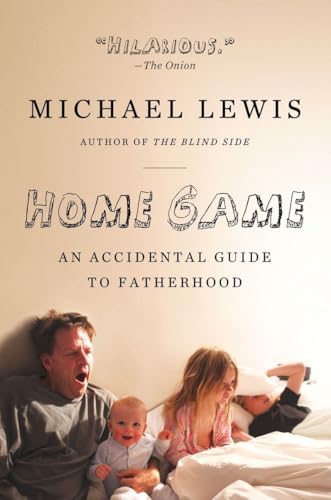
I’ve adopted a LIFO approach to my infinite pile of books. So, when Yoav Lurie suggested Michael Lewis’ Home Game: An Accidental Guide to Fatherhood after I posted about Lewis’ book Blockers, I grabbed it. I’m not a parent, so when it came out in 2009, I just skipped over it. But I enjoy Lewis’ writing, and I realized it might be fun to read something more personal from him.
It was. While the book covers about nine years, the births and early lives of three children, and his relationship with his wife Tabitha Soren, it moves fast. Other than the cringeworthy section at the end about his vasectomy, I found his one-liners regularly hilarious, even though many of the experiences were foreign to me.
I felt like I got to know Quinn and Dixie pretty well, and I expected I’d like both of them. Walker was a newborn in the book, so I had less connection there. Then, searching the web tonight for more information on them, I discovered that Dixie died in a car accident in 2021 when she was 19. The short time I spent getting to know her through Lewis’ eyes suddenly became very poignant.
I explored some of Lewis’ comments about how he processed his grief, including a short 60 Minutes interview where he described his “ruthless” filter for survival. To function in the aftermath of the crash, Lewis drew a line down the middle of a piece of paper. On one side, he listed things that made him feel better. On the other, he listed things that made him feel worse. Writing landed in the first column. He stopped doing everything in the second column.