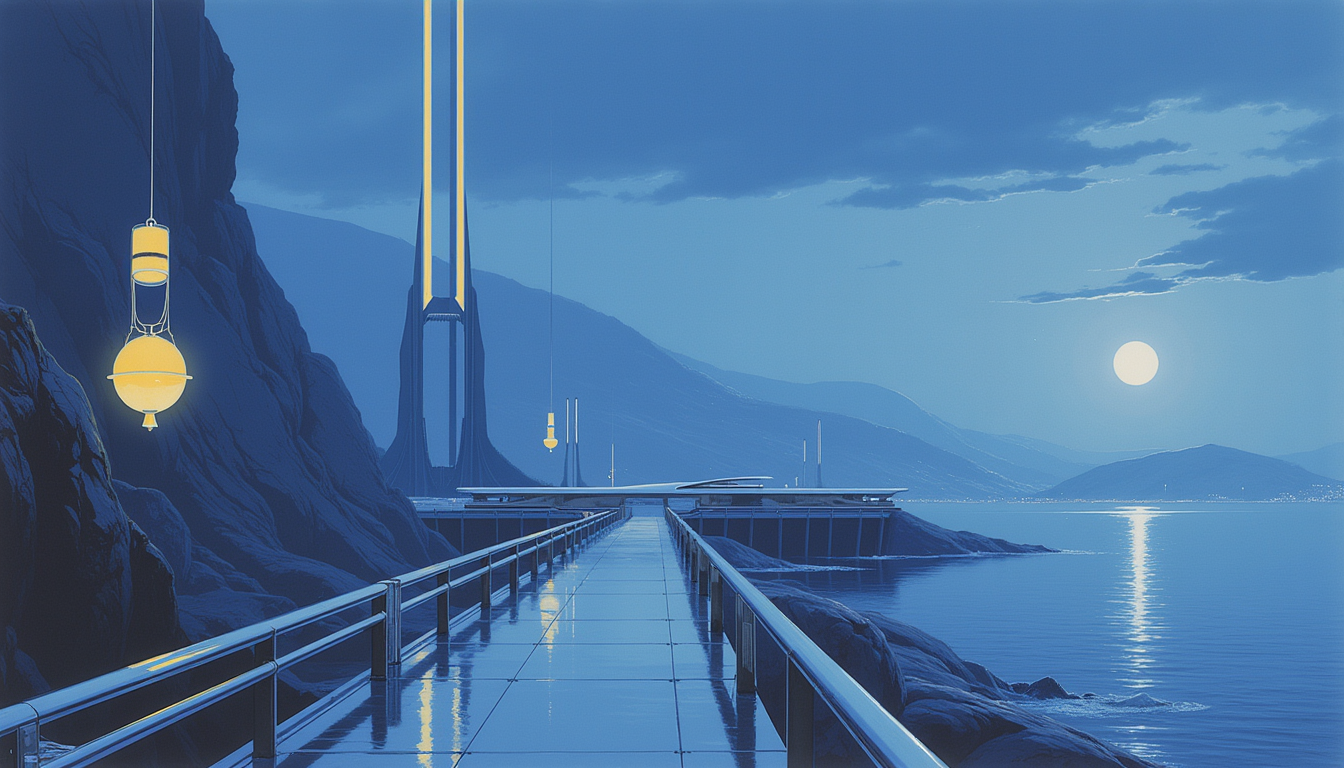
Listen: https://serve.buildtall.systems/ce4e728a92f2282182a82d04e41ea25128fed14681698f8d1a4d0d3b68edbfae.mp3
The piece is in C aeolian and runs for 1:01:35. A kalimba, an organ and a clarinet are recordings, slowed, looped and stretched, set over synthesized pads and a low drone. A field recording of thunder, far off, returns now and then, played as it was recorded. The system chose the notes, the periods and the order of the chords, and the arranger spread them across the hour. The kalimba is the voice the listener remembers: two notes a fifth apart, C and G, returning about every nineteen seconds. The organ holds a single low G, a current through the room. The clarinet turns between E flat and B flat, another fifth, at a longer period, so it drifts out of step with the others. The three loops never line up for long, and the piece does not repeat as a whole. The arc starts thin, with the pads, the drone and the kalimba alone for a while. It fills toward the middle of the hour, when all three loops and the thunder sound together, and it thins again toward the close. The three phrases chain in many orders, and the piece ends on the last chord of a phrase. Nothing here is played live. The system made these choices, and the hour is what they became.
Spectrogram: https://serve.buildtall.systems/fa7890f78d1add68592fe01cb299816a0d32b0dca689ab2a7ee5e378ee2fa0bd.png