Some works of art are objectively better

Follow into
Save into
Follow into
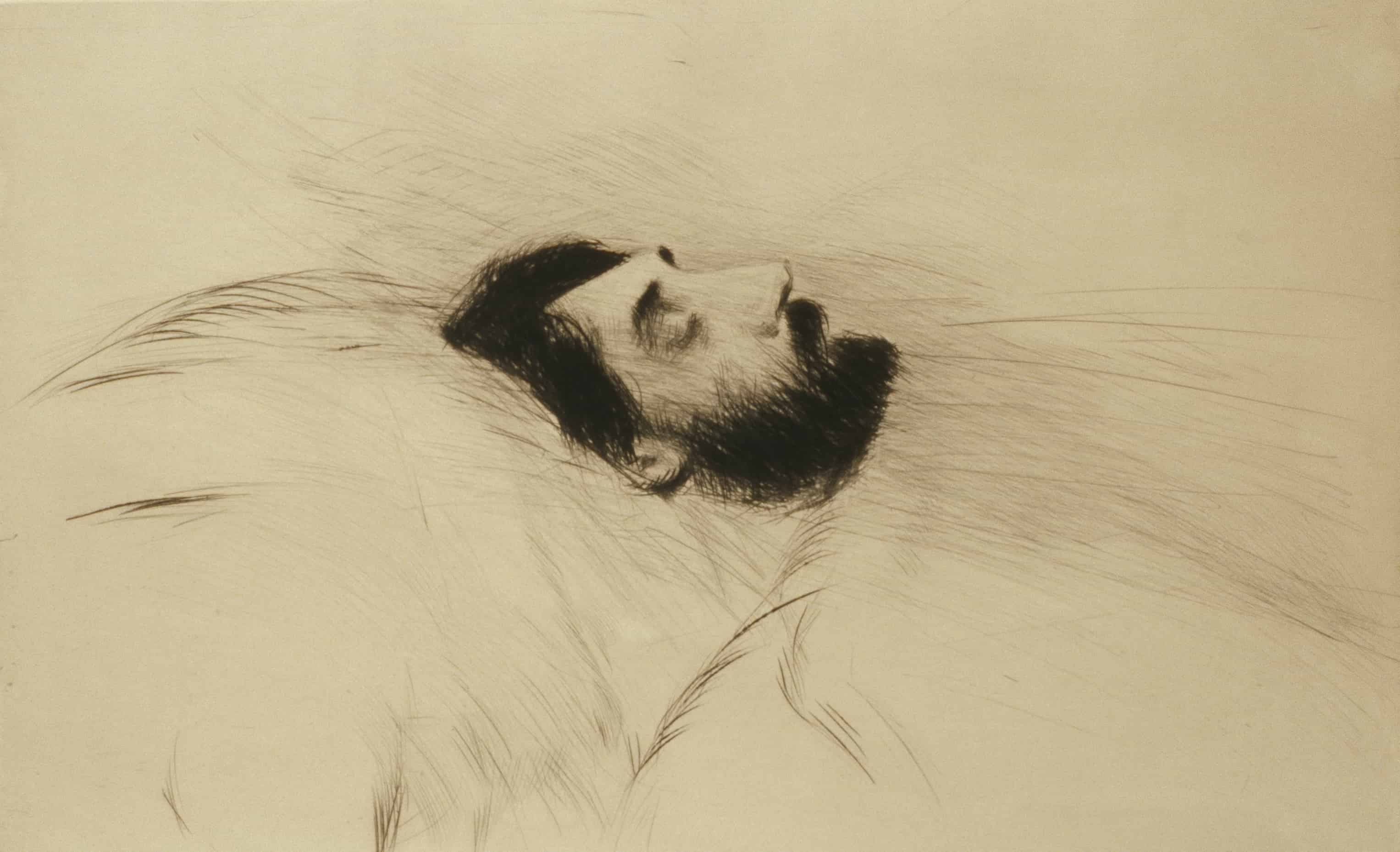
Marcel Proust on his deathbed, Paul-César Helleu, 1922.
When I was younger, I spent a lot of time arguing about art in my friend’s hot tub. We would tiptoe through his parents’ backyard and ease into the tub — his dad was not fond of nighttime noise — then hit a cannabis vape pen until our faces were numb. We would then discuss Superman, weightlifting, our friends, our girlfriends, Osama bin Laden, etcetera for between four and seven hours. Roughly once per session, we debated whether there was such a thing as objectively “better” or “worse” works of art. I took the positive view.
My friend is very smart, open-minded, and amenable to disagreements. But not everyone is like my friend. I have had this same argument with other people, and in some cases, the people I’ve talked to about it have gotten very mad. Usually, that’s because they watch a lot of reality TV or mainly read romantasy books. Even before I provide the standards for my aesthetic hierarchy, they know that my pyramid won’t rank their pleasures kindly.
Now, the view that all art is equal in quality is pervasive in our culture: a philosopher would refer to this worldview as “aesthetic relativism.” Beyond widespread endorsement, though, aesthetic relativism also seems to have become something of a liberal virtue signal. Anyone who disagrees with it is seen as somewhere between rude and fascistic.
But as you might have guessed, I remain (more or less) an aesthetic absolutist. I think we can come up with defensible principles that distinguish some works of art as better or worse than others, just as we can come up with defensible principles that distinguish some moral choices as better or worse than others. Joni Mitchell writes better songs than Sabrina Carpenter; The Graduate is a better movie than Fast and Furious; Pride and Prejudice is a better book than A Court of Thorns and Roses.

Final shot from The Graduate (1967).
Here, I want to explain one principle that I think clarifies why all of the above inequalities are true. In short, great works of art — in comparison to bad works of art — can induce both a greater breadth and depth of subjective responses in their audiences. I call this principle generativity.
But let’s ease into that argument. I’ll start with an analogy from a much less controversial topic: the nature of human intelligence.1
‘Twas brillig, and the slithy toves
Picture the smartest person you’ve ever met. Maybe a former professor comes to mind. Maybe you had your self-esteem rocked by a peer in one of your classes who could intuit an elegant and accurate answer to every question posed by the instructor. Maybe you had a passing conversation with someone brilliant at a party.
Whoever that person is, think about them carefully. What exactly made them seem so smart? What felt different about the way their mind works, compared to your cousin or a random stranger?
I’ll tell you who I’m thinking of, and why: Dr. Colin Milburn, a professor of English and Science & Technology Studies at UC Davis. I first met Colin as a freshman, when I took his class on science fiction literature. To this day, I’ve never seen a lecturer who equalled his elegance and coherence. My strongest memory from the course is him reciting the Jabberwocky poem from memory to close out a class on “Mimsy Were the Borogoves.”

The Jabberwocky, Rodney Matthews, 2017.
But stunned as I was by his lectures, it was not until three years later — when I asked Colin to advise me on my honors thesis — that the singularity of his brain really hit me.
During our first conversation about the thesis, I ventured dozens of references from the books I was reading for my project and several vague connections between them. He somehow had read all the books, even though they had little to do with his field of expertise.
The kicker, though, was how he quickly and enthusiastically revealed the useful core in every one of my half-baked ideas, or if no such core existed, invented one from scratch. It simply did not matter what we were talking about: he could generate deep and important insights on every subject I raised. He was the conversational equivalent of Neo at the end of The Matrix.
I bet you had a similar standard in mind when you picked your smart person. A great mind can take almost any solvable problem and find an exhaustive solution.
Intelligence, in this sense, is a combination of analytical breadth and depth. No one thinks true intelligence is just extreme competence in a single area or superficial competence in several; otherwise, Googling “smartest people who’ve ever lived” would turn up the biographies of autistic savants and podcasters. Sure, some geniuses are not polymaths — the great physicist Paul Dirac, for instance, was maniacally focused on physics alone. But many others are: Einstein, Aristotle, Polanyi. And for the exceptions, there is always the sense that they could probably solve other kinds of problems if they were motivated enough to try.
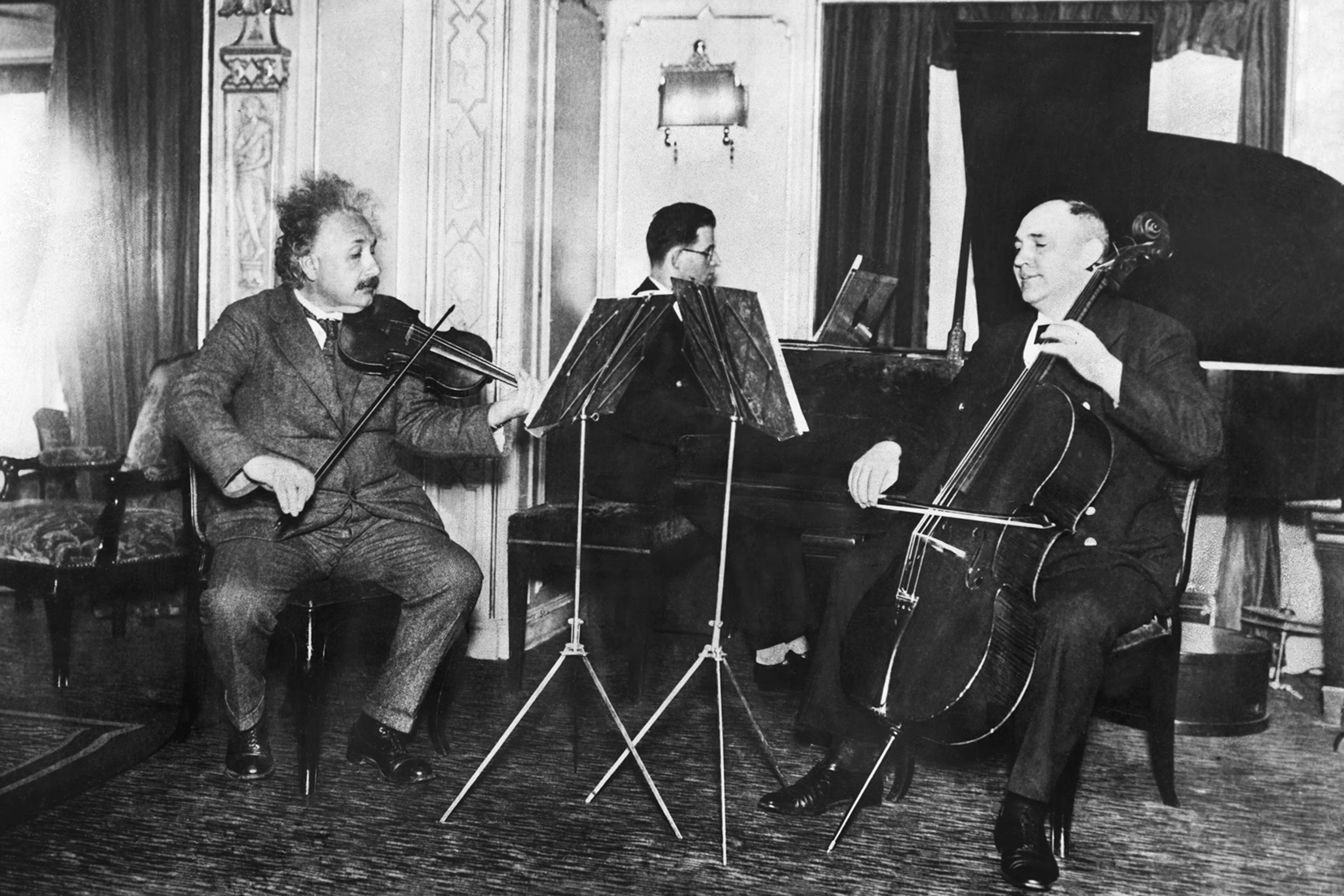
Albert Einstein playing violin.
Let’s summarize. The domain of intelligent activity is problem-solving; exerting intelligence means, most fundamentally, solving problems. Based on the above arguments, high intelligence is not being able to solve one kind of problem really well or being able to solve many kinds of problems poorly. Intelligence is the generalized capacity for solving many kinds of problems well. Someone jumped into your head when I asked you to picture a smart person: the reason you picked them, probably, is the degree to which they displayed this ability.
Okay, fine. What does any of that have to do with art?
Heaven in a wild flower, eternity in an hour
In the previous section, I said that the domain of intelligent activity is problem-solving. By identifying that domain, we came to a defensible conclusion about what makes someone more or less intelligent.
Similarly, I think we can come up with a standard for aesthetic quality by identifying the domain of aesthetic activity: the purposeful generation of subjective responses in an audience. Art is our preeminent experiential technology.
By calling art a “technology”, I mean that art is designed to serve a function. Bikes and cars function to get us from place to place. Phones and emails function to help us communicate at long distances. Music, books, movies, and other aesthetic mediums help us experience worlds, people, and feelings that we otherwise probably or definitely could not access.
This is a pretty uncontroversial take; you find similar arguments at the heart of most theories on the nature of aesthetic activity.
Consider the ancient Indian perspective on art as the work of rasa, which translates from Sanskrit to something like “essence.” Indian aesthetes believed that the central aim of any musical, narrative, or dramaturgical work was to trigger a particular emotional state in its most purified form. Artists drew upon the eight rasas — love, laughter, fury, compassion, and so on — to structure their works; most famously, musicians composed ragas that corresponded one-to-one with particular rasas.
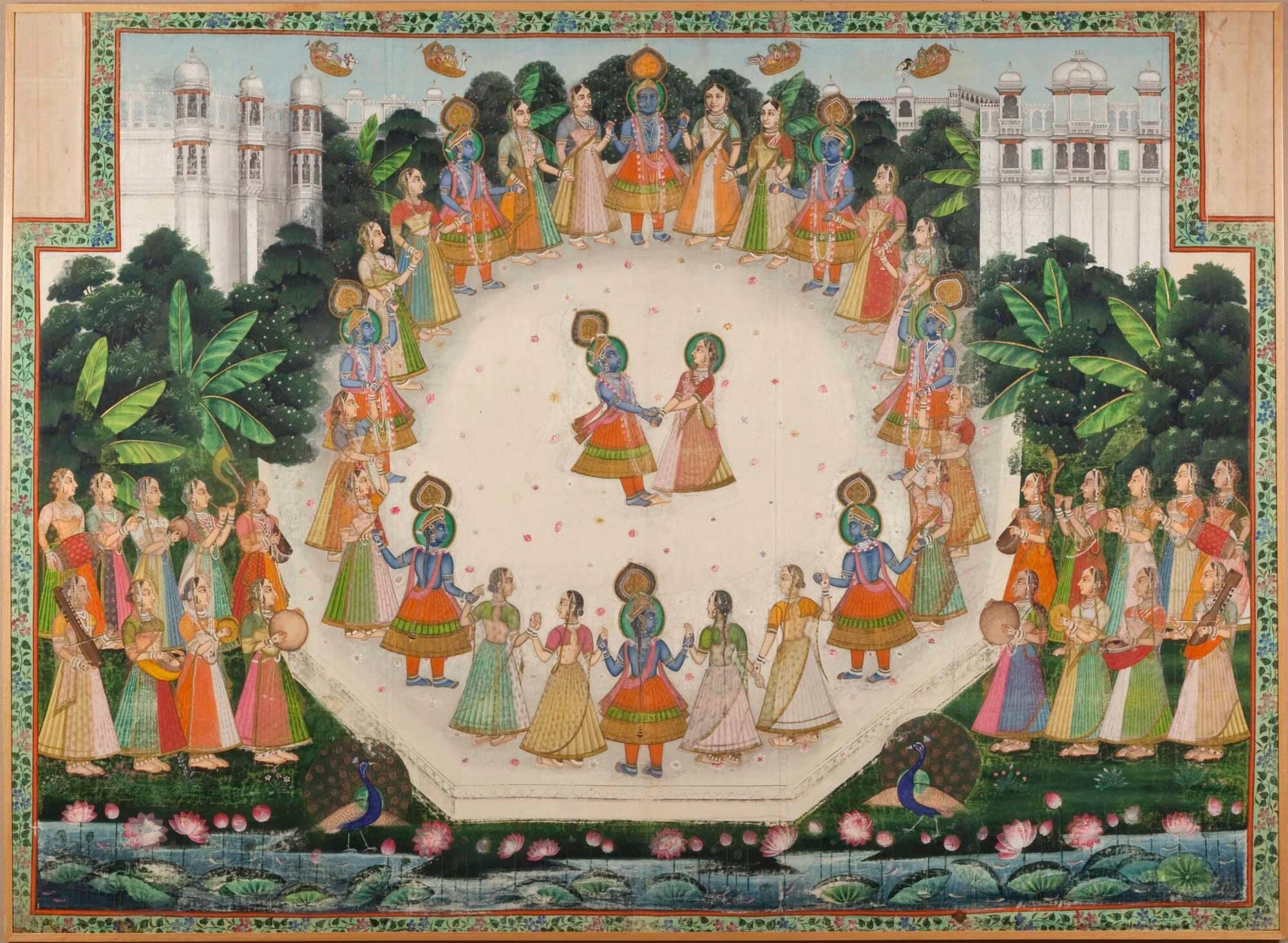
Rasa Lila Pichwai, 1875-1900.
Placing emotion at the core of aesthetics is common. Aristotle held a similar view. More recently, though, philosophers have emphasized other experiential capacities latent in aesthetic activity. One especially interesting framework — focused on video games — was presented by C Thi Nguyen in Games: Agency as Art.2 He argues that games are uniquely adept at helping us experience other kinds of being. When I play Dishonored, I feel what it would be like to be an assassin; when I play Minecraft, I feel what it would be like to be an entity that can fluidly reshape the world.
But I digress. It is hard — perhaps impossible — to conclude that the domain of aesthetic activity is anything other than experience. Where disagreements exist, they usually focus on which kinds of experiences art is meant to induce, or which mediums best serve different varieties of experience. As far as I can tell, there is very little contention about the broader point.
The domain of intelligent activity is problem-solving. Consequently, I said that greater intelligence means greater capacity for solving many kinds of problems well. I’ll draw a similar conclusion about art. The domain of aesthetic activity is the induction of experience. Consequently, aesthetic quality stems from the capacity to induce many kinds of experiences well. Again, I’ll refer to this capacity as generativity.
To pump our intuitions a bit, let’s consider two songs: based on their relative generativity, I think one of them is better than the other. Please listen to them closely.
The first song is called “33 ‘God’’” — it’s by Bon Iver.
The second song is called “PART OF ME (HARDSTYLE SPED UP)” — it’s a remix of a Katy Perry song produced by SICK LEGEND.
Based on the principle I’ve outlined — and based on my own intuition — I think the first song is better than the second. Why?
Speaking from experience, “33 ‘God’” is a song that can make you feel an utterly piercing sense of nostalgia. I used to listen to it while driving back to college after visits home; in my mind’s eye, the flickering piano and cicada-like synths flashed grainy memories of movie nights with my dad and games of tag on my elementary school blacktop. But the song can also scaffold sublimity — I have played it while standing atop mountains — or soothe irreversible losses. It is infinitely rich: listening to it repeatedly, you come to hear the universe in a single song.
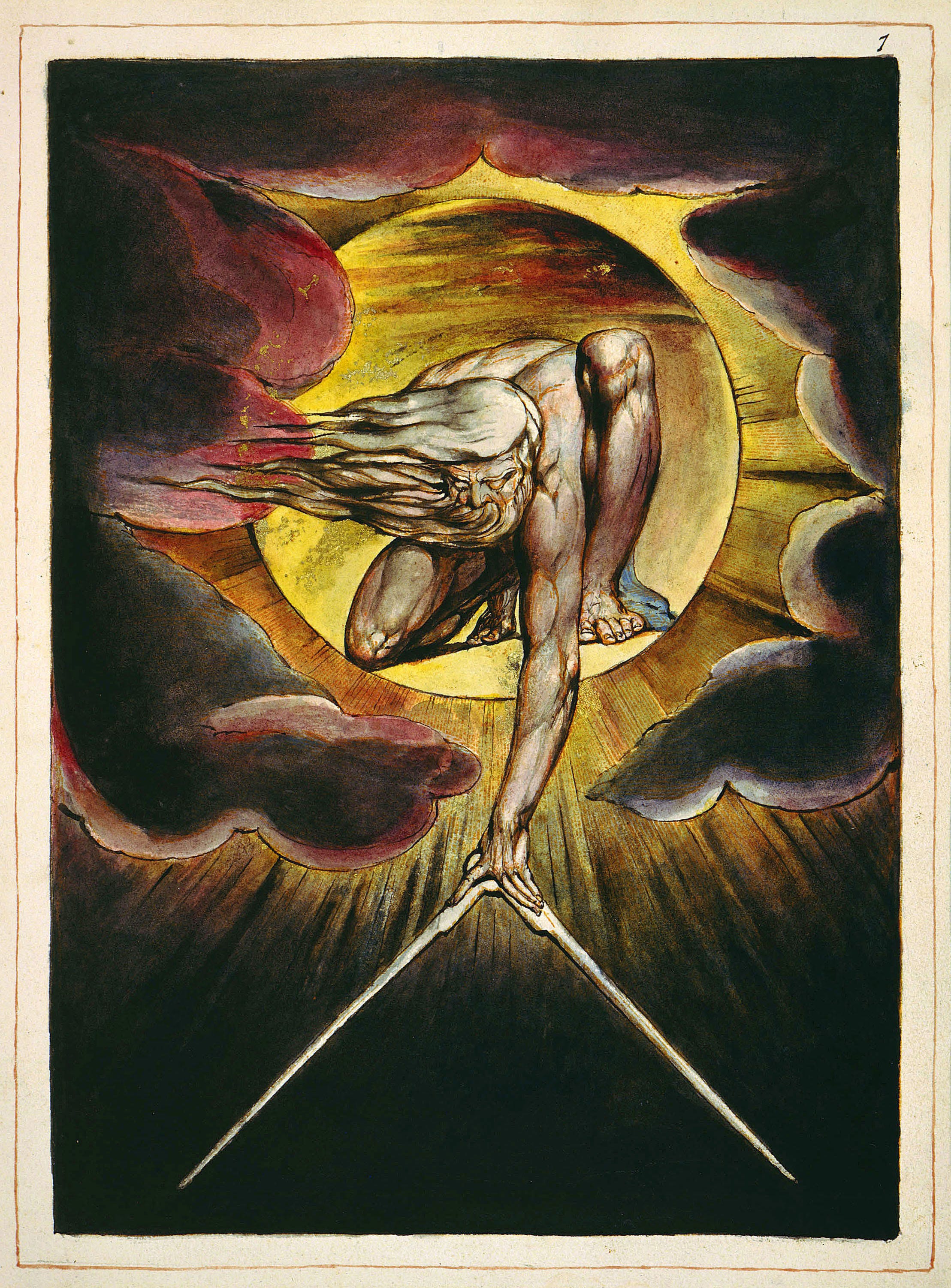
The Ancient of Days, William Blake, 1794.
Speaking again from experience, “PART OF ME (HARDSTYLE SPED UP)” can do exactly one thing well — it makes you feel manically energetic. I’ve found that useful. I play it if I’m lifting heavy or falling asleep while driving. But there is no there there: what you can experience with this song is probably limited to what I’ve described, though it does that one job well.
Bon Iver’s song is generative; SICK LEGEND’s less so. That makes Bon Iver a better artist.
I started with an obvious comparison. I would be shocked if anyone, based on their gut reactions, disagrees that Bon Iver is superior in this case. But I suspect that some readers might like my other comparisons less. By the standard of generativity, I think most fairy smut books (I’m assuming — I haven’t read them) are artistically deficient. Same goes for Marvel movies, most of Drake’s music, and Rupi Kaur’s poetry.
We could keep going through examples until our brains explode. But it’s really not that hard to figure out whether a work of art is generative or not. If you imagine that going back repeatedly to the song, movie, book, or whatever it may be could yield distinctly new experiences every time, then that work of art is generative. If you cannot imagine the work containing that flexible richness — as I cannot for songs by SICK LEGEND — then the work is not generative. By my standard, at least, that makes it quasi-objectively bad.
To be or
What does generativity — and more broadly, accepting some kind of aesthetic absolutism — mean for how we should structure our artistic lives? Nowadays, this is a really important question. We spend huge swaths of our time listening to music and engaging with narrative media. To a very real extent, art is no longer an imitation of life, but the stuff of life itself.

Reproduction of “The Mousetrap” from Hamlet, a play within The Play.
So, the answer depends on what you want from your life. That’s a personal choice: some people just want to feel comfortable. The full richness of the world is not for them. They don’t care to travel and argue and gaze into the swirling Aleph. For those in that group, I take the cliche view: like what you like, and don’t let people like me judge you for it.
But if your rasa of life is wandering as widely and deeply through the jungle of experience as you can, then you should think carefully about your art. Of course, I won’t ruthlessly demand that you cut anything less than Tolstoy from your library; I love listening to SICK LEGEND at the gym, and I can’t wait for his next Sabrina Carpenter remix. But I will not tell you to like what you like, because liking is not the point of living — at least, not if you’re as pretentious as me.
I’ll close with a quote from the great literary critic Harold Bloom. An interviewer once asked him: why read?
Because you will be haunted by great visions: of Ishmael, escaped alone to tell us; of Oedipa Mass, cradling the old derelict in her arms; of Invisible Man, preparing to come up again; like Jonah, out of the whale’s belly. All of them, on some of the higher frequencies, speak to and for you.”
Unpublishable Papers hold the universe in a grain of sand. Subscribe!
No rancorous debates about this recently — phew!
Thanks to Ethan Wellerstein for recommending this book.