The Data Center Backlash

Follow into
Save into
Follow into
You know . . . Americans really don’t like data centers.
Opposition to having a data center built near you has surged to 75%, with 60% of Americans strongly opposed. Nearly half of Americans think that data centers generally are bad for the country. Concern about having one built near you is higher than it would be with a nuclear power plant.
This has been building for a while. I was on a panel in Michigan and was asked about the public sentiment. I responded, “Well, to the average American, the value proposition is, ‘we’re going to build something near you that will consume power and water, and might be noisy and an environmental problem, in service of a technology that might take your kid’s job. And what you’ll get in return is . . . unclear.’ So it’s little wonder that Americans aren’t responding positively.”
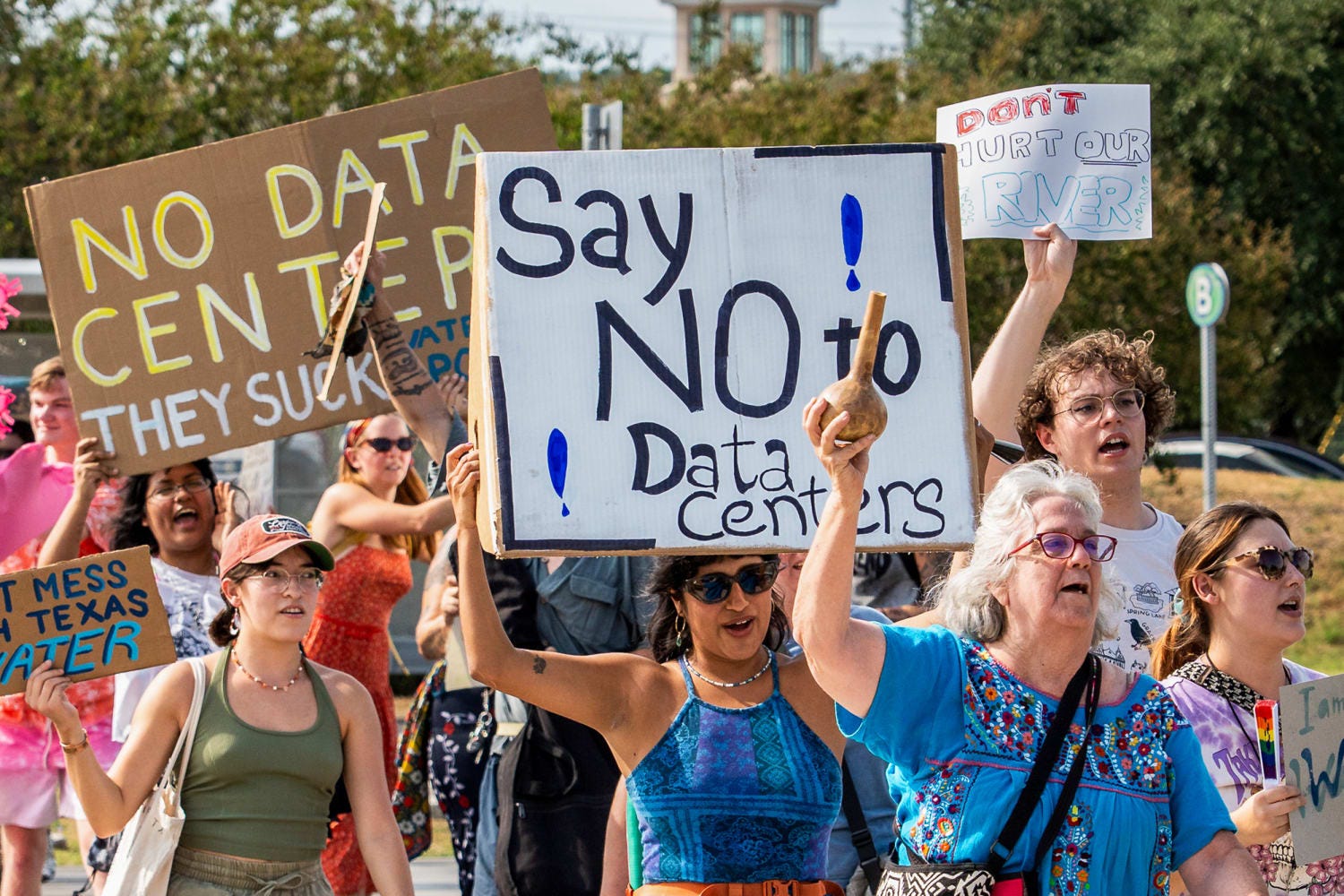
The political tide is turning. Despite the above, officeholders in both parties were reluctant to criticize the data centers because they are critical to the development and economics of AI and often brought with them an infrastructure buildout and tax revenue. Josh Shapiro, Governor of Pennsylvania, is a notable and typical example, who lauded the centers. Now, he’s imposing state regulations and limitations.
The early adopters of the anti-center backlash were the Bernie populist types, who sensed both a need and an opening. But now, even Republicans like Gov. Greg Abbott in Texas are pushing for a pause, as they are getting an earful about them everywhere they go. This is an issue that is close to 80-20 and is transcending party lines.
Big Tech got another black eye last week, as Meta settled a multi-state lawsuit alleging that its products harmed the mental health of children for $18 billion. It agreed to implement a set of features for minors, including a two-hour daily time limit, a mode where the kids can’t use it between midnight and 6 am, and limits on notifications during school hours. While Meta didn’t admit fault, the settlement sends a clear message that the tide is turning against them too. $18 billion isn’t that big a deal to a $1.5 trillion company – about 1% of their value – but more lawsuits and restrictions are on the way. Meta is quickly becoming a reviled company to millions of families; I’m sure the upcoming sequel to “The Social Network” won’t help.
Also last week, Bill Gates came out and said that society is totally unprepared for the impact of AI economically and socially. He wrote, “the silence is deafening” and can’t believe that more isn’t being done to guard against the downsides of effects like job displacement.
Thanks Bill.
So what happens now? Multiple data center projects are being delayed or scuttled. I don’t see the public changing its mind on this one. The AI industry has a lot of bridge building to do but it’s not actually built for a charm offensive. Meanwhile, Anthropic is gearing up for a trillion-dollar IPO as early as September and OpenAI is aiming for a similar public market debut in 2027. It’s going to be harder for investors to remain enthusiastic about the AI bet if the compute timelines aren’t feasible and protests are commonplace.
The AI industry has had its way since its launch. We’re about to see how it handles adversity and how this influences the anti-incumbent midterms. The backlash is here.
For an interview with the author of “Pronoun Trouble” professor John McWhorter from the Hudson Valley Ideas Festival, click here. To check out Forward Party candidates including Todd Achilles, Seth Bodnar, and Brian Bengs click here. For 3 months off your mobile bill with Noble Mobile, click here or email matt@noblemobile.com and use my name to switch or explore. It will save you money and time. To get a copy of “Hey Yang, Where’s My Thousand Bucks?” click here and use the code “UBIUBI” for 25% off. It’s not Labor Day yet.